Episode Transcript
[00:00:00] Speaker A: Hi and welcome to A Time to Thrill. It's me, your host, Amy Austin. It is June and today I have the pleasure of sharing an interview with USA Today best selling author Lynne Marshall. I met Lynne a thousand years ago. Oh my God. Probably like 2008 would be my best guess. Maybe a little bit earlier.
Well before I had children and she had much older children and now she has grandchildren.
So we met through the Los Angeles romance authors. And she was such a great mentor and friend to me, especially earlier in my career when I was clueless. I remember actually there's a story we were at the Sportsman's Lodge. I think the meeting had moved from. It was at Borders, but that went away and then some at some school. I can see the school in the corner of Laurel Canyon actually.
And that went away and then for a while it was at this place called the Sportsman's Lodge, which is like sort of iconic in LA history and now it's been renovated into something completely different. But we had this meeting at the Sportsman's Lodge and my second book had come out and it had been the first book I wrote. But the second book I wrote sold, probably because it was better before the first book. But when I sold my, my second book, I went to the publisher and I was like, look what I have in hand. And they had a slot open. This is not great. And they did publish the book, but I didn't love it as much because it had been my first attempt and honestly it wasn't as good as. I mean, they got successively better.
And we're at the meeting and I think at the meeting you're supposed to announce like your new book. And I don't know what I said, but she was like, even if you don't love your books equally, you have to project out to the world that you love them equally. And I was like, that's true. And since then I really do not talk about which books I love more than others. And let me tell you, some dear and close to my heart and some I can never see again, but that's not a reader experience. I have heard from readers and their love of my books is not the same as mine. So I just accept that advice and move on.
So we'll be talking to her, but before that I actually thought I'd talk about my normal audible thing. So this month I'm reading and listening. I still do it. It's actually the greatest thing ever. Reading and listening to two books. The first is consented by a doctor in rural America. I actually don't know what state she's in. It was it.
I want to say it's Pacific Northwest, but I'm probably gonna get this wrong. Her name is. I'm gonna pronounce wrong. She's Chinese born, and her name is Zed Zha. Actually, I've never heard her say it. I've actually only read her writing, and it's called Consented. And it's actually a really interesting conversation into about the United States medical system and how it treats patients based on a whole lot of factors, mainly gender, race, and socioeconomic status.
It's fascinating. I've been reading her writing on substack for.
I don't want to say years maybe. I don't know how long she's had a substack. And this book is sort of the culmination of that, and it's really good.
The other book I'm reading. Oh, God. And listening to. Actually, I started listening to this one. I haven't read it. I mean, I haven't opened the Kindle copy. I've only listened to the audible copy. Is a book called the Ambition Penalty. I believe her name is Stephanie Connell. I'll put this in the show notes in case I get it wrong.
This is another person I've been following. And look, I probably need a fiction palette cleanser because this book discusses that women are penalized for not being ambitious enough, being too girl bossy, or being too ambitious, and no matter what women do, they're penalized. And, oh, she talks about, like, all these ways in which women in the workplace are penalized no matter what they do.
And actually, like, so I was walking this morning listening to the book, and one of the examples she was giving was about Joe Biden coming out in support of Kamala Harris for the election when he pulled out. Is it two summers ago now? Oh, wow. Okay.
And what was interesting is that many of the donors kept saying to him that they thought she was too ambitious. And I'm like, I'm walking, watching them tear down houses. Oh, my God, L.A. and I'm walking and I'm trying to think, what is too ambitious? Like, is running for president too ambitious? We've had a lot of people, a lot of people run for president.
Everybody and their brother thinks they're qualified. Gavin Newsom's out here. He's been running freaking 20 years.
And it was just super interesting that people thought that that was too ambitious. But even then she gives, like. So that's a big example. But then she gives smaller examples about how this is actually Shocking to me. So people would get. Women would get job offers and they would negotiate for a higher salary in the job offer and the job offer would be rescinded.
And I was like, oh, my God.
Because what she said in the book is the thing that people have always said to me is that you should always ask. Because the worst people can say is no. What I didn't know is you could ask. And the worst people could say is not only no, but what we offered you off the table.
But men, and especially men who have given women this advice, like fathers and husbands, are surprised because that had never been their experience.
And I'm only like in chapter one. But I don't listen at home mostly unless I'm cooking. So tonight I'll be reading it on Kindle. So I'll have these both in the show notes. They're both available on Audible.
Consented. Came out maybe two or three weeks ago. I want to say it was the last week in April, and this book came out May 19th.
So June, in exactly, I think, 10 days, I will be on an airplane going to Budapest. And when I come back, it'll be many months later.
So I'm looking forward to my usual summer abroad. I cannot wait for festivals and good food and just like time with my son where there's like, no pressure. We're also going to go to maybe Tallinn in Estonia.
He's always wanted to go to the Baltic States. And so we're going to the Baltic States.
And I think that's it. I don't know.
I don't think there's any other, like, any other plans. I think that's enough. So somebody said to me, they're like, how many days you plan to spend in Tallinn? I was like, oh, I booked the hotel on Points, by the way, for like three nights or something. And he was like, that's enough.
And I was like, really? He's like, you're gonna walk through the tiny town, the tiny capital, two or three times and you think to yourself, this is enough. So who knows? I have a bike tour planned and maybe like, I will plan a bus tour to see something else in Estonia. Like, I just don't know. But anyway, so I'm super excited to share this interview with Lynn. If you listen, you will talk about, oh my God, this 16, 18, 18 years ago that I met her. So she writes romance, but she still writes romance, unlike the rest of us. And in this book, we spent a lot of time talking about, like, sort of multi generational in this talk, multi generational relationships, which actually I realized is one I have with her. But it's, it's sort of interesting because it's something I actually like to read about, but I'm not sure how much it's featured in fiction. And we also talk about her being out of retirement because a few years ago I like reached out to her and she was like, I'm retired. And then I like called her like a few weeks ago, I was like, it appears that you are not retired.
And like Betty writer, she couldn't give up writing, but she did give up la. And she's no longer here.
But without further ado, let's have this lovely, lovely conversation with Lynn Marshall.
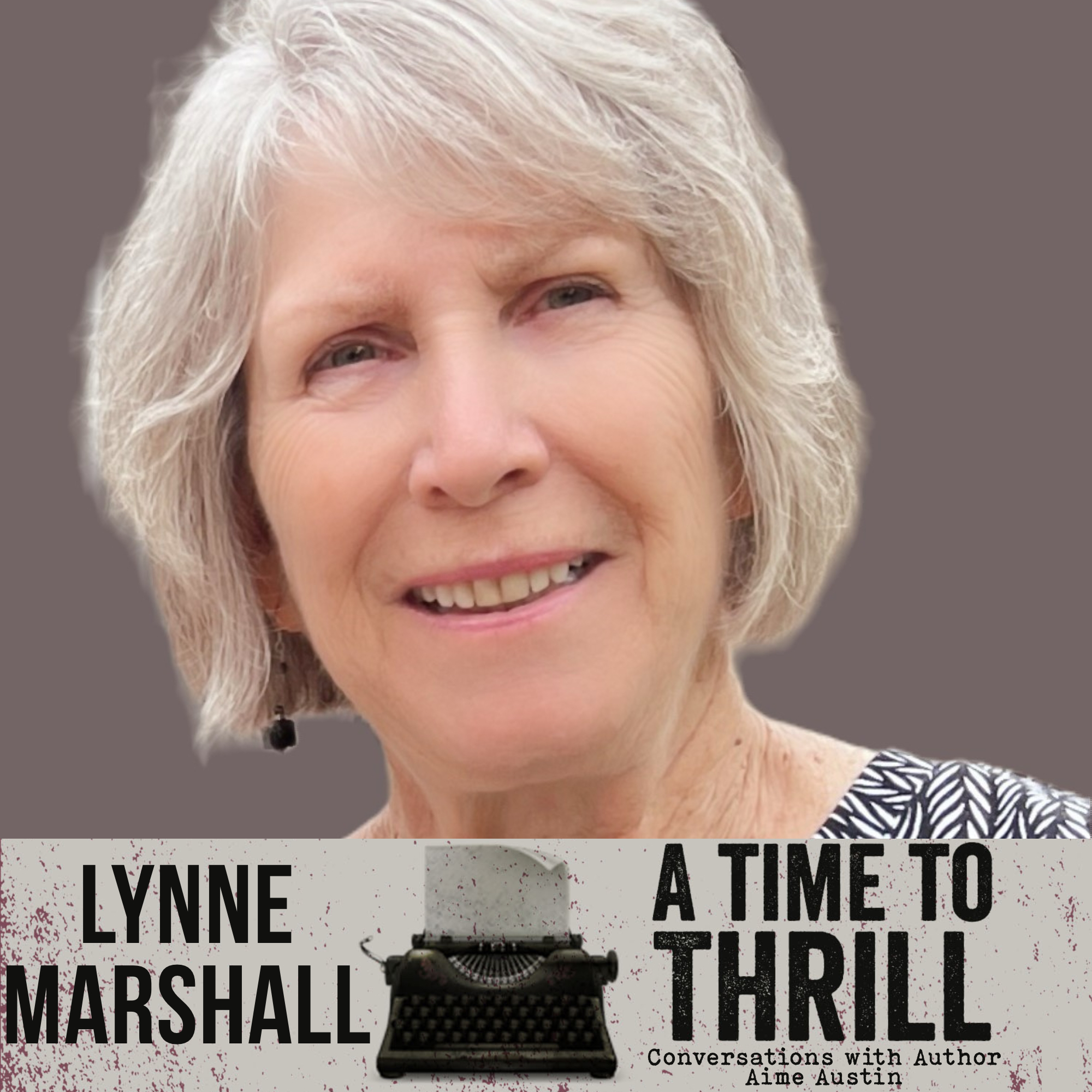
Hi and welcome to A Time to Thrill. It's me, your host, Amy Austin. This is month. I have the absolute delight. I'm so excited. I'm so excited. I'm so excited to speak with USA Today best selling author Lynn Marshall. Hello.
[00:09:12] Speaker B: Hi. Nice to be here. Really happy to see you again. I miss you.
[00:09:17] Speaker A: I know. Well, Lynn left us. As many people, so many. I always explain to people. So many people have left California, which is fine, but also you left California. So. Okay, I used to do this at the beginning of episodes, but I haven't done it in a while because it hasn't come up.
So when I started the podcast, I interviewed. Well, I haven't mostly interviewed people I don't know, but I would interview people and I would thank them for the thing that contributed most to my writing.
So I talk about you often on this podcast because, okay, I don't know if you remember this years ago. Okay, so my son is 16 and when I met you, I had no child, so.
And then I was pregnant and then I had a child. But years ago we met at a coffee shop, maybe a Starbucks Coffee Bean, I don't know, somewhere up in the valley, like near Northridge. And I was, I wouldn't say I was crying, but I was a little emotional because I was struggling with writing.
And you said to me, well, you asked me something about my writing routine. I was like, well, I like to get up and I like to do yoga and I like to go for a run and then I like to eat breakfast and then I like to like walk the dog and then I like to write from 1pm to 8pm and you were like, well, that's lovely.
And I was like, but my son at the time, he was only in morning preschool or whatever they call it. And then he was home and he was two and a half and did not was not conducive to writing. And you said to me you were going to have to learn to write in the morning.
And I was like, I'm sorry, what did you say?
And you said, well, now that he's in preschool or nursery or whatever, you can write during the time he's in school. And I was like, but I'm not a morning writer. And you're like, but if you would like to continue your career. Career, perhaps you will write in the morning. So I was resentful. And then I got over it. And then I started writing in the morning when he was at school.
And so I changed because the circumstances changed. And it was the greatest advice because I think I would have sat there for two years and just been upset.
[00:11:20] Speaker B: Yeah, yeah, yeah. Sometimes you just have to bite the bullet.
I wrote before I went to work, which meant I had to be started. Right. Start to write at five in the morning and get my time. Because by the end of the day, day I. My brain was shredded and I had no energy for writing. So I put it first and then went on with the day after that. So it really got words on the page. Because you can't fix stuff if you don't have any words on the page, right?
[00:11:53] Speaker A: No, it's true. And so now, well, he's 16, so I have a little bit more flexibility, But I write around activities still.
[00:12:07] Speaker B: Okay.
[00:12:09] Speaker A: Do the same.
[00:12:09] Speaker B: Very active. Yes, but you're trained to do that too. I mean, there's some writers that can just. They can write anywhere, on airplanes and everything. So whenever you have a chance, but that you do what you have to do to get the words down there. But I'm glad I got you to get some books written early on there.
[00:12:32] Speaker A: It would have been a dry few years. I was just. I couldn't piece it together in my mind about how I could change my routine. I don't know why it didn't occur to me, but that's a different conversation.
[00:12:43] Speaker B: Well, I'm always amazed by authors who have young children that can write.
I didn't start writing until my kids were teenagers, so, like around your son's age. And I started having some more breathing room. And I didn't realize that I wanted to write until then either because I was obsessed with their lives and everything. So it worked out for me. But the funny thing was, that was quite a number of years ago.
And my husband, I think at the beginning thought I was having an online affair because I didn't tell anyone that I was writing a book. And every Time I had a chance, I'd sit down and he would look at me like, what are you doing over there?
Nothing kind of thing. And then I admitted. I came out and I said, I'm writing a book. So, yeah, that was, it was fun to admit that and to move on from there.
My camera keeps stuck.
[00:13:40] Speaker A: Yeah, I see that. I can. Give me a second. Because it's showing here that you have full Internet.
So let me. Hold on. Give me one second.
Let me see if I can change. Will it allow me to change?
It may. It allowed me to change the resolution. If you gimme just one second. Hold on.
Settings.
[00:14:05] Speaker B: Well, I can tell you some stuff while you're doing that. Moving to a new state is a big adjustment. We came here for our grandkids, our youngest grandkids, and we want all our grandkids to know us and have a relationship with us, you know, as. As we age.
And that was really hard to leave our three California grandkids and come out here.
But, you know, it was something that we thought was really important. And we go back and see the kids all the time in California and we have good relationships with them. We do FaceTime and all of that. And they're a bit older, so they know us and we just want the younger ones. We have a two and a half year old and a five and a half year old. Yeah. So we have quite the array of five grandkids. And coming to a new state, getting everything set up, Internet like this, stalling out, it's.
It was very frustrating to deal with. You get used to good old California and then you move to another state and it's different. So.
[00:15:13] Speaker A: Yeah, and it's not allowing me to change the settings without having you go out and come back in. But I don't want to do that because I know what would happen.
[00:15:24] Speaker B: My hands, when I talk, that seems to be throwing me a little.
[00:15:29] Speaker A: Oh, because of the. Oh, I see why I could see that.
Okay. Anyway, I will cut all this out. So let me go back. So I guess my first question is, what made you decide to write? Because the, the.
I don't want to call it a conceit, but a lot of people want to write a book.
Most people do not.
So what made you sit down and think, I'm going to try this out?
[00:15:55] Speaker B: Yeah. Okay. So I didn't think I had a book, but then this story came to me and I was always like daydreaming and I thought, there's something wrong with me.
Why am I living these other people's lives in my head. And then I realized this was something that wanted to be written and I had this couple in mind and I was writing their story and it was everything wrong about it that you shouldn't do, you know, went over 25 years kind of thing instead of, you know, and, and, and I didn't even know it was a romance. And. And then I remember the day I got to the part and I said, oh my gosh, I've got to write a sex scene. And I was like shocked. Like, why didn't I know this was coming? You know, it was just so funny.
But I had it on my heart to write it. And I realized that was a lesson in I can write a beginning, I can write a middle, and I can write an end. And it might have been the schlockiest piece of stuff that never deserved to be seen by anyone, but I proved to myself that I could do it. So doing things ass backwards or bass ackwards, then I sought writers groups and. And I found the Romance Writers of America and I started really learning stuff fast and it just, it all clicked.
So. But the first book that I wanted to write was just a love story that was people that didn't get together when they were young and they had a second chance after their lives were lived out for the most part. And I thought it was very romantic, but no one was interested in a story like that, so.
[00:17:50] Speaker A: So wait, does. Is that book, is that a never published story?
[00:17:54] Speaker B: That is a definite never published story, yes.
[00:17:58] Speaker A: Okay, so if the first book, then what made you write the next one?
[00:18:02] Speaker B: Oh, then I started.
Let's see, there was a second book that I wrote.
Again, it was just this wild story.
I am a half pantser and a half plotter. I come in with kind of a synopsis.
I force myself to kind of write it down and then I go off and things start happening and I go, well, this has to. I want to put this character in this situation right now. And then all kinds of things start popping into my mind. That's partially why I'm an insomniac, because those thoughts come to me in the middle of the night where you just need to get it off your chest, get it written down and then go back to bed.
And so the second book was a totally different book and it wound up many, many years later and many changes to it becoming a book for Tule.
I actually, yes, it was. They named it Her Baby His Love.
And.
And so yeah, it was that sent me into the Thule world. But that was long after I had made the third step. I had.
I don't know if you remember T.J. bennett. She's a wonderful, wonderful author. Well, like you, she said something to me that set me on another path. She sent me an email and she said, you could do this. And it was about the medical Romance authors group.
And as a, you know, an RN for 25 years, I thought, well, I could probably parlay some of my knowledge into the that. Because at that point I dec.
I can see that the odds of me getting published with one of the big five in the US was, you know, really against me. And Mills and Boone at that time was actively seeking American authors.
So I threw some stories together, I thought of a trilogy. And I got to know one of the editors at the annual conference and she invited me to submit. And the first one didn't fit, but she said, please give me something more. And the second one did and sold. And then eventually I went back and got that first one published because I knew how to rework it to their standards.
So much shorter, medically driven and a romance. And so that's what got me published.
And I wound up being like the fourth American that they ever bought. So that was.
Yeah, it was an honor to do. To be there.
[00:20:52] Speaker A: So wait, what we. What year? I remember the blue covers. I mean, I remember them quite well.
[00:20:56] Speaker B: Yeah, that was in the 2006, my first book came out. That was. I start. So it took me five years to get published.
[00:21:05] Speaker A: Yeah, okay, I remember. I mean, I remember because I think that's the year I joined rwi because it was at the San Francisco year.
[00:21:16] Speaker B: That was 2008, I think. Okay, San Diego.
Yeah, could be.
[00:21:22] Speaker A: I remember.
[00:21:24] Speaker B: I know there was in New York there were a couple. The first one I went to was in New York, which was really exciting.
[00:21:32] Speaker A: I think the first I went to was in California mainly because it was low barred. I mean, I'm from New York City, so it's not that, but it was a low.
I could go without feeling like I had to commit. Commit. You know what I mean? Like I could fly an hour or drive or whatever.
[00:21:45] Speaker B: In your neighborhood. Yeah.
[00:21:48] Speaker A: So that made it easier to go. So how did you.
Because I feel like you wrote a lot of the medical romances. I don't know, a lot. I don't know.
How did you like incorporating that aspect of your. I don't say your life, but like the knowledge that you have in the background that you have into books as opposed to, I don't know, writing about I don't know, people in LA just running around doing whatever.
[00:22:14] Speaker B: Well, that.
I hate to call them doctor nurse stories, but that's kind of what they were looking for. But these days it's more doctor doctor because there's actually more women doctors than men. And so I always thought of something interesting that intrigued me or personal experience on the floors, working in the hospital and you know, the arrogant doctors and the ones that are kind and the ones that are jerks and, you know, I had a lot of background in that along with the illnesses and so forth. And I just found ways to bring people together through medicine. They both had to be involved in working in the same place. And then everyone has a life outside too. So, yeah, it was just pretty easy to come to come up with stories that interested me as well, you know, so.
And then the unusual illnesses that you could come up with too, those are,
[00:23:21] Speaker A: those are popular on TV as well. Still, people love an unusual illness. I don't know why. Like, my son really loves House and I'm just like, really? And he's like, yes. And I'm like, okay, it's. I don't know, maybe people have a medical mystery.
So when did you make. Because I remember this. Oh, my God, it feels ages ago.
What not caused. What made you make the transition from medical to the more general.
I can't remember what the line was called back then, but you. When you transitioned out of writing the medical to the longer ones.
[00:23:57] Speaker B: Special edition.
[00:23:59] Speaker A: Thank you.
[00:24:00] Speaker B: Yeah, that. Well, I had never stopped writing the other books. In fact, I wrote two full length romantic suspenses that I got published through Wild Rose Press. Remember the Wild Rose? That was a digital.
[00:24:15] Speaker A: I remember those. Yeah. Okay.
[00:24:18] Speaker B: And I never stopped writing those books. And so I always had something going on on the side while I was writing medical romances.
And then I had an agent interested in one of those books and she couldn't sell it for me, but she really loved the book. It was called One for the Road.
And anyway, so I said, hey, would you do me a favor? I'd like to submit a book to the special edition line. And I, you know, can't really get my foot in the door. So she got my foot in the door for me there. And after that, so I wrote nearly 20 medical romances and a dozen special editions.
And I enjoyed writing a bit longer books, more involved and more characters. It wasn't just the two people you could have. They encouraged family members and, you know, bigger stories and.
[00:25:15] Speaker A: And then I wait, that was 80,000.
[00:25:18] Speaker B: Not that big. That Was the super romances. They. They went under.
Yeah, yeah.
These were more like 65. And I think they're up doing the 75 now again. But you had more time to develop characters and so forth. So that was fun. But I always on the side wrote the other stories that I wanted to write too.
[00:25:40] Speaker A: I really like the special edition. I. Well, because I like a longer story. So that's. And I do like the family stuff and the more complicated background, but that's.
That's me.
I do. I think 75,000 is actually the. Probably the ideal book length for most books.
[00:25:58] Speaker B: Uhhuh. And even now women's fiction is a. The. About 80,000 is what they. You know, people are reading shorter, but it's hard to cram all that stuff in 80,000 words. That's what my current book is sitting around 81,000.
[00:26:16] Speaker A: Okay, so I have a different question. Do you think that learning how to craft those stories within those bounds helped you become a better writer? Because I always. My. I have this theory which actually I don't think I ever talk about is that like people who wrote for Harlequin, Bills and Boons, whatever that, whatever it's under now umbrella, really learned how to craft a story within like specified page limits, specified bounds to get to the story, cut the fluff.
Similar to like newspaper writers or even television writers, people who can write a compelling story within some time bounds. Word bounds, genre bounds.
But do you, do you think that that helped learning to write and being edited within those strictures?
[00:27:07] Speaker B: Yes. Yes. And the editing and the revisions were.
They would just turn a book around when you think, oh man, this didn't quite come together like I want. The editors were so on top of this needs to be here and can you add this and get rid of that? And the whole point of being able to sell books is to. To publishers is to be able to revise because no one's book is perfect when you turn it in. And an editor is always going to find the things that need to make it sellable. So I really appreciate it. I was fortunate to have super good editors in the uk and my editors in the US were the younger ones willing to take on new authors.
And I was still super impressed with them too.
[00:28:01] Speaker A: Many of us are jealous of that because just at the time that I started publishing was the time that those lines were constricting and many of them are gone. Well, a lot of them are gone.
It was this huge sea change.
But I think that I lived in this now that my storytelling could have benefited from More involved editors. Yeah, because when I started publishing, the editors were less involved. I'm sure you've heard all these stories. People got the, like the. No edit. Edits. Oh, it's great. And you're like, is it though?
[00:28:36] Speaker B: Yeah, yeah, that. Is it. I think a lot of the digital publishing, maybe I got some really good digital. Even Wild Rose Press gave me great editing notes too.
I. I really feel like I was lucky and guided throughout. And Tuli's editors were wonderful. I wrote three books for them.
And editors really make a book better.
[00:29:04] Speaker A: And.
[00:29:05] Speaker B: And so I, I hired one for Cynthia Peabody and she, she helped me face the music on some stuff in there that I.
Yeah, I. I chose the super close third person so that it was all in present, kind of present tense, but not an ibook.
And I had to face the music on that with it. And I literally had to go back and rewrite the whole book and good old third person to make it a little more manageable for. Because there's dream sequences, there are meditation walks. There's lots of things that were going on and it needed to be grounded more than I had it. So a good editor is always wonderful. Yeah.
[00:30:00] Speaker A: Okay, so I have a bigger question. What made you come out of retirement? Because what's the time between the last Tooley book and the Cynthia Peabody book?
[00:30:09] Speaker B: Yeah. Okay, so actually the last special edition came out right when Covid was hitting. I came. I had a book out in 20 and then three books in 20, 21.
And the sales, let's say that the digital sales did not make up for being in stores and people going into bookstores and buying things.
So it was very disappointing.
And then my husband had a horrendous bicycling accident.
And literally I got the call. Your husband was found unconscious on the side of the road. And at this time, during COVID I couldn't go to the er. I couldn't follow him anywhere. You know, I couldn't. Couldn't be by his side as he had this horrible thing happen.
And I just said, screw it. I'm done with everything. I'm just going to focus on home and hearth right now. There are more important things.
[00:31:15] Speaker A: But it didn't last because, you know, we talk about writing, we talk about retirement, and it's not a job. It's not like nursing, which is very physical, which I don't, you know, that's its own something, but that people like, literally, like, they walk out that day and they don't go back.
So what made you come back?
[00:31:34] Speaker B: Okay, so I went through withdrawals and I came up with some wacky ideas for books, you know, and I would throw them out to my son or daughter and they just go.
And so my daughter in law and son signed me up for something called Storyworth.
And it's a website thing where you get a question every week and you wind up telling about your life. And that staved me off for an entire year because I was focusing on my story.
And at the end of that year, I had this lovely book.
So that was. That stayed me off. And then after that was done, I'm back to, you know, having these stories pop into my head and not really writing them. And then Cynthia Peabody came and she wouldn't let go. And I just was. I just followed her on this wild tale. But it really was part of the whole Covid experience because I was involved in online mental health care, you know, talking to a therapist, and I was listening to meditations and I was learning how to deal with my insomnia.
And one of the wonderful meditations was about taking a walk in your own neighborhood and just laying there in bed and being totally relaxed after doing the exercises and then getting out there on your street and walking. And it became so realistic.
And I felt so safe because I wouldn't do that in my own neighborhood at, you know, one in the morning or whatever, but I could do that in a meditation walk. And it gave me this courage that you wouldn't have in real life. And that's where Cynthia came into being, that she. She started discovering that, whoa, these. These dreams, these walks are actually happening.
And.
And so my story evolved out of that, and she became her own little superhero of her hometown. But it was a long journey, and everyone thought that she was really off her rocker, and.
She did, too. So it's a lady dealing with extreme grief, and her mind is taking her in places she never thought it would go, and she just finds her group of people that she needed to know to get where she needed to be and go and accept that these were, yes, really weird experiences, but they needed to happen. So it was.
That's how she came along.
[00:34:43] Speaker A: So would you. So I was thinking about this because you sent me the book last week. Do you consider the book.
Well, I was gonna ask you, do you consider it like, magical realism? Do you consider it women's fiction? Where do you see it sitting or where does it sit?
[00:34:57] Speaker B: That's the shooting myself in the foot. I consider it women's fiction with magical realism.
A touch, you know, but it is women's fiction because it's all women's issues.
It's what people experience at a certain time in life. And with the loss of a spouse and making new friends and inner. There's a. I love that. The energy, intergenerational friendship that she has with Juniper and.
Yeah, so that, that all was great.
And it's all, to me, women's fiction.
But these days, you go on Amazon and you try to find a category that says women's fiction. They don't have it.
[00:35:44] Speaker A: There's no.
Yeah, yeah, it's. It's split up.
[00:35:48] Speaker B: Man's fiction. There's no women's fiction. Fiction. I don't know. But you just want to stream. Because women's fiction is a thing. I'm in the Women's Fiction Writers Association. We are the thing.
[00:36:00] Speaker A: No, it's a thing. But when they re. When they overhauled categories at this point two years ago, three years ago, I'd have to think about that. They were really into. Niching down into these little things. But then they left that left out the broader category. So they have like, you know, like women's fiction, superhero, you know, whatever. And you're like, okay, that's very specific.
But what about something more general And.
Well, that's its own thing because that's how people find books. But we are where we are. So appears that Peabody is going to be part of a series. Or is it a duet or do you see it a lot?
[00:36:36] Speaker B: It's a duet. Yes, it's a duet. The second one is Cynthia Peabody's Big Fat Fake Funeral.
And I had a ball writing that.
It was, it was a heart wrenching book to write the first one, but I enjoyed it overall. But the second one was just fun and, and also sadness. And word is that, you know, my beta readers got a little teary eyed at the end. So. Okay, that made me. That made me happy.
[00:37:10] Speaker A: No, we like. We like that. So what? And this is something I think about often because I talk to writers about this. What made you decide to write about older women? Because books, I mean, I would say the book industry is no different than, I guess, TV in the sense that it's. It skews younger. Although with shows like Grace and Frankie, I mean, there is now, especially with streaming, more older women being represented in the media. But in books, I think. Well, no, maybe it's the same percentage. It's not as much.
[00:37:43] Speaker B: Okay, so remarkably Bright creatures.
Tova is 70.
She's grieving, she's dealing with her things. And that had magical realism. In it, an octopus that was very bright and, you know, talking throughout.
And that book made me feel like, yes, this is good to see an older character. A lot of British books had older characters, but they were always guys.
Let's see.
[00:38:17] Speaker A: Did you read the Correspondent?
[00:38:20] Speaker B: Oh, yes, yes, I loved it.
All letters. Yeah, that's.
But let's see. So there was the book the Curious Charms of Arthur Peabody.
You know, all the British books. That was a mistake I made when I first started writing Cynthia. I was doing it in the British style. So, you know, Cynthia Peabody's, you know, boom, you know, and that didn't work. I had to get it right. You know, many, many revisions for this book. But British people are more willing to read about older characters.
[00:38:57] Speaker A: This is true.
[00:38:58] Speaker B: I don't know why, but they certainly are. And okay, so I'm thinking this beautiful, wonderful Jamie Lee Curtis, the actress, is in her late 60s and she's proving that she's doing her best work ever.
And yeah, she, in my mind, she's Cynthia Peabody.
That's, that's the kind of character she, she's. She's just, you know, just got, she's got what it takes. She did a wonderful movie called Emily Something or other. Ella, Ella McCoy. It was called James L. Brooks Came out of retirement and made this lovely little. And she was the aunt in it. And. And she just does plays. She's not afraid to play realistic older women.
[00:39:48] Speaker A: And no, she's not afraid to play her age. And I appreciate that. I was thinking about that because I saw something recently about her graying. I mean, using. How can I say this? Not coloring her hair or not. And it's.
Let me say this. Until Covid, I didn't know that people colored their hair until people's hair went.
And I was like, wait, everybody's calling their hair. Like, I just didn't. I had no idea.
But I think it's interesting that she's willing to do that and still have short hair and just be in California where many people are not willing to be right.
[00:40:24] Speaker B: When I saw her in the first season of Bear, the TV show, I was like, wow, go you. You know, there she is just being realistic and wonderful and yeah, so there to me, women readers, we're all aging up. Not you, darling, but
[00:40:46] Speaker A: we ought to age the same race.
[00:40:49] Speaker B: And, you know, you get tired of reading about 30something women when you're, you know, well past that. So I thought, let's deal with the older women's issues and find her new tribe or whatever you want to Call it.
And, and it was just a joy to write. I really, really was happy to do that.
[00:41:10] Speaker A: I do like the intergenerational part. I think I wish there were more of that in books because it exists in real life. Like I was thinking today, all the people I spend time with, they're not all exactly my age. That'd be kind of odd.
But we don't talk as much about it outside of like family TV dramas or books that are sagas. We don't spend a lot of time talking about intergenerational relationships. Relationships.
[00:41:31] Speaker B: Right, right.
And for a part, it was it with the Juniper, the character she fed a part of Cynthia that Cynthia never had children, so she obviously doesn't have grandchildren. And this sweet young girl from next door really filled a role for her and vice versa. She didn't have a grandma figure, so they really had a good friendship going on.
[00:41:59] Speaker A: No, I really appreciate that because I do find even from some of the young people who walk through my house, God save us all, that they have perspectives on things that I don't really.
[00:42:09] Speaker B: I know, like have I ever asked a teen, would I ever think that I would ask a teenager for advice? And yet she was asking Juniper, you know, what should I do about this? You know, and it was by. It was not just a one way friendship. They were good for each other. And, and it's true, you need to hang out with people of all ages.
[00:42:33] Speaker A: Well, I find that younger people are not weighed down with, well, cynicism, just maybe to some degree, but all the history because like we'll talk about it and they'll be like, okay, but this is the way it's always done. Let me just tell you about like 1982, you know, as their eyes really crawling. But they do have some persistent perspective on current things without carrying. I don't call the baggage of. The baggage of history. Maybe.
[00:42:55] Speaker B: Yeah, yeah, right. There's a scene where Juniper and Cynthia are. She's teaching her the, the whole killer thriller dance. Michael Jackson. And so they're talking while they're dancing and she's saying, look, I'm wearing a lifetime. I'm wearing a lifetime, you know, and, and Juniper saying, well, you know, this is all I know and therefore I do know everything in my world, you know, and they're just explaining to each other how they're coming at life and doing it while having fun with the dancing. But it's true. You learn from every person.
I learned from my grandkids, you know, they're just, they're amazing. Every Kid's amazing. And they all have thoughts and.
And they blow you away with some of their reasoning. And sometimes it's good to get out of our ruts of how we deal with things.
So.
[00:43:51] Speaker A: Yeah. And I find that children are not limited by the bonds of, like, many, many things. And they're like, well, why can't they just do this? And I think, you know, maybe they could. Like, you know, maybe they could.
It's fascinating to me.
So let me ask you this, because you have like a whole, whole second career that you kept. A first career, I guess, that you kept.
What did you read when you were younger? I mean, like, little. Like, you know.
[00:44:18] Speaker B: Yeah, little. I. I don't have a lot of memories. My mom said I like to be read too, and. And I guess, you know that I had the whole assortment of the Little Golden Books.
[00:44:30] Speaker A: Oh, my God, I remember those. Sorry, I hadn't thought about those in ages.
[00:44:33] Speaker B: Yeah, I liked fairy tales, but I. I look back and I realize I was trying to be a writer when I was a kid, too. I remember I wanted to write about a girl, probably related to having read, you know, some of the murder. Not murder mysteries, but the mystery books of the teenagers at that time. And I wanted to write some and I tried to write a story, but I got carried away more with the, like, illustrating it. I love to draw, so I. That's what took me away with that.
I remember, really, the first books that I was.
Fell in love with was the summer when I was probably just going to start middle school. We called it junior high in my age, To Kill a Mockingbird. That's when I. I thought, this is. This is writing I'm interested in. Then Rosemary's Baby and things like that. They.
[00:45:35] Speaker A: You know, I have the original one on my shelf.
[00:45:38] Speaker B: Yeah, yeah, those.
[00:45:39] Speaker A: It was my grandmother's. It wasn't mine. Yeah,
[00:45:43] Speaker B: could have been mine. Yeah, those. Those were the books that I really was looking for. Some meat. And so those. I. I found them in books like that, but.
And, you know, I. I was a reader, but I would go off on tangents.
I'm blanking on a lot of names of the people I used to read, but. The Cave. The Clan of the Cave Bear.
All of those books. Yes. And of course, all of the vampire books by. I cannot think of her name.
[00:46:16] Speaker A: Oh, Anne Rice.
[00:46:18] Speaker B: Yes, Anne Rice. All of those.
Yeah.
[00:46:22] Speaker A: Okay. I'm sorry, I'm stuck on.
[00:46:24] Speaker B: That was when. That was obviously when I was older. But, you know, those were books that I got carried away with and and couldn't wait for the next one to come out.
[00:46:33] Speaker A: Yeah, but all of those, what they share, because I've read all those, I mean is that they were really compelling. And I don't know, I don't even know what Clan of the Cave are. I don't even know, like, I don't even know what genre those would be now. Would they be SOGs?
[00:46:44] Speaker B: I know, but she was a strong young woman. I, her name was Isla or Ayla or something like that.
Yeah. And she was a strong young woman and it was just fascinating to hear about her life and how they lived and all of that. And then the second one where the guy came into it and the horses.
[00:47:06] Speaker A: I remember it, I read it on a, it was a seventh or eighth grade field trip. We would do these like week long field trips. We would drive around to historic sites on the east coast and so we would have a lot of downtime or time on the bus, I guess. And I would, I read the Clan of the Caper and the second book, which I can see the COVID I just can't think of the title.
[00:47:26] Speaker B: Yeah. With the horses. I, I don't remember.
[00:47:29] Speaker A: I feel like it's a sky or something. I'd have to think about it. But I remember reading those on the bus and just being like compelled by those stories.
[00:47:38] Speaker B: Yes.
[00:47:39] Speaker A: It's just, it's, it's fascinating. But I don't even know if those things would be popular now because I don't, like, as I'm saying this to you now, I'm like, what genre would that be? Where would that be in the store? Like, would people want to read something? So long would it. Anyway, so many questions.
[00:47:53] Speaker B: No, that's true. They, we used to, we were not afraid to read long books back then.
[00:48:00] Speaker A: Well, I also had a lot of time. A lot of time. Children have a lot of time.
So what, did you read romance when you were younger?
[00:48:10] Speaker B: Not unless it was part of a book. I always felt like the part of a book that drew me in the most was the romantic part. But they weren't necessarily romance books.
And I'm blanking on a lot of examples for you. But I always would perk up more when there was a romance. And so I, I was drawn to that and I didn't realize it, but.
[00:48:39] Speaker A: Yeah, no, that was one of my favorite back when RWA had like the Golden Heart and all of that. But I love the books that had like the novels with strong romantic elements.
[00:48:49] Speaker B: Yeah, strong romantic elements.
[00:48:52] Speaker A: Because you could have both things. You could have like some story that's not necessarily, necessarily about romance, but then also the romance, and I really like the combination. And I don't even know if I. If I read those kinds of. I read mostly thrillers now, but I did really, really, really enjoy those books. I think women's fiction for me became a little too Women's fiction. Y. So it sort of.
There's like this huge genre now. People, like, they go home and they find themselves, which is fine. But I also want some more or I want to. Different thing to be happening at the same time.
[00:49:25] Speaker B: Yes.
[00:49:25] Speaker A: But I can't have everything that I like, so that's that.
[00:49:29] Speaker B: Yeah, yeah. You know, I go through spells. I also read Jean le Carre and, you know, I like all kinds of authors, male and female authors, but strong stories, intriguing stories. I love crimes and thrillers and things like that. Yeah. So that's your genre now.
[00:49:53] Speaker A: Yes. Well, they sell better than the romance for me. My romances were too. Maybe too sad, too complicated. I'd have to. I have to really. I've thought about it, and then I stopped thinking about it. But I still, like, if push came to shove, I think I would only write women's fiction.
But alas, I can't do. We can't all have what we want.
So when. So now that you're.
Let me say this. Are you back to writing?
[00:50:22] Speaker B: I would say I am. I wrote two books in the last two and a half years, and I am actually three chapters in on.
I'm thinking of Juniper, but seven years ahead.
So she's 25, and there's a lot of questions that came up about her because of, you know, she was raised by 2Dads and her mother was out of the picture. And in her book, I'm exploring her mother's story, but her mother has bequeathed her a flower shop on the other side of the country, so it'll be in Maine.
And she just plans to go to town and sell that baby and get the money and leave because she has no allegiance to family that she doesn't know.
But these mysterious letters from her mother, speaking of the correspondence, keep popping up through the door. And they were written by her mother before she passed away, specifically explaining her side of the story of why she chose to have Juniper go to live with her dad and his husband when she was three years old.
[00:51:43] Speaker A: Okay, I have a question because. So I was talking to my son about this last night. So he was talking. He has a friend who has a sister whose name is Saffron, and I said, you Know, when I was in college on the east coast, you knew the people from California because they would come and their name would be like that. And I. So I wanted. This is just a curiosity of mine. Do people ask her about her name when she's on the East Coast?
[00:52:06] Speaker B: Well, I haven't. I haven't had that happen, but maybe I will.
It was funny. The very first letter, though, from her mom says, I fought for your name, Juniper, you know, and it's. It's a strong. And she said two qualities that. That were. And they're. I'm blanking on them right now. Resilience and. And strength. As she said, that's what the Juniper stands for. And so there was a reason behind it. But, yeah, they were all California kids. But I have to go back into Cynthia's book. She's invited by Juniper to come and speak to her sociology class. And there she encounters all of the different kinds of kids now with interesting names like Arbor and Nissan. You know, just interesting names. And. And one of the girls who is a. Well, I can't know. She's. She's a they. Sorry, I can't say. She. They is a day.
And she asked her to come to her podcast. And so Cynthia is like, wow, what am I going to talk to her about? And she winds up having the greatest time talking to this kid.
And.
And they are both equally interested in each other. So I thought that was fun. That was a real fun. Seem to write, too, and.
[00:53:27] Speaker A: No, the intergenerational stuff is. It's just. It is. It is so fun because it's interesting to see life from a different perspective. And I realize, because I'm working on a book now, I wonder if everyone's the same age. Well, no, it's a. It's a book about a horrible thing that happened. So maybe. But that's. It's a whole different kettle of fish. But you're really making me think more about the role of intergenerational. Intergenerational relationships in books. And I wonder.
No, you know, who has the best one is.
Oh, my God, I'm blanking on her name. Wait, hold on. It is.
It's a writer who.
I can't believe her name is just out of my head. She wrote these mysteries, but now she's writing this book where the character. The main character's name is Cal Hooper. He's an American.
[00:54:14] Speaker B: Oh, Tonya French. I'm reading that.
That's my current read. I'm on the second book, the Hunter. Tanya French.
[00:54:21] Speaker A: Yes. Yeah. Tana French.
[00:54:23] Speaker B: Those.
[00:54:23] Speaker A: Okay, so what do you think about that? Because I love that Intergenerational Relationship is one of my favorites from the last few years. I think about it. There's a new one coming anyway, it doesn't matter, but I think.
Yes, yes, yes, yes, absolutely.
[00:54:39] Speaker B: And he kind of saved her, and she kind of saved him because he was really floundering there and.
Yeah, that's what. I love that. And the same thing kind of happened in Remarkably Bright Creatures. She. She finds this younger guy that she gets along with. And only the Octopus knows the most about you guys. Don't you know you're related?
No, I'm sorry. I shouldn't give that away. But spoiler.
Yeah. Spoiler alert. Yeah. No, the Tanya French books. Yes, those. I. To be honest, I prefer the Cal Hooper books. The Chicago Cop guy and being kind of a fish out of the water over there, I love it. So I'm enjoying that one.
[00:55:26] Speaker A: Yeah, that's the. The first one. And because it's. It's. It. There's still crime novels and there's still a crime, but it's really so much about the relationships and his relationship with people in the town, and it's a.
Just adore it.
[00:55:42] Speaker B: She has a slow build on that, on the suspense, Very slow build.
But her writing is so lovely to read. And the way she phrases things.
[00:55:53] Speaker A: No, I can't get enough. Anyway, I don't know. Sorry about that. I just. When I read the first one, I was like, I'm obsessed. Because her previous books, Is it the Dublin Murder Squad and all of that are very.
Not formulated. I don't want to say that because they're very well written, but they're very interesting. They're very similar to many Irish women crime books of that era. And this Detour, I actually don't even know how well they sell. I really enjoy even more than those.
[00:56:25] Speaker B: I. I could not get into the Dublin stories as well because they just.
I kept things. Big things would happen and then a lot of little things for a long time. And I got impatient. But Cal always. It's a slow, slow story. But it was enjoyable all the way through. So I was happy to start reading the next. And I will read the third, I'm sure.
[00:56:48] Speaker A: Wait, so you're on the second one where her dad comes back?
[00:56:52] Speaker B: Yes. Yes. Okay.
What is it? Ardnikatie or Ardnik. I don't know how they pronounce it, but yeah, her dad, the.
The scammer schemer guy. I know. I know his type.
[00:57:07] Speaker A: Oh, I okay, okay.
[00:57:09] Speaker B: I know. You don't have to tell me. I know, but I. I know you can sense it.
[00:57:13] Speaker A: It's so.
[00:57:14] Speaker B: And there must be a reason she called it the Hunter.
[00:57:17] Speaker A: Yeah, it's. It's. It's great. It's. It's a great book. Okay, sorry, I. I'm done with that.
I just really. You just. I was just like. Oh, that's. The. Those, though. Yes, I can see those kinds of things were really, like, very interesting to watch those relationships develop despite the age or because of the age. It's hard to say. Okay, yeah, interesting. So what, when you were writing romance, were you reading a lot of romance?
[00:57:48] Speaker B: Yes, I read a few of my favorite people. Susan Elizabeth Phillips and Kristen Higgins. I really like her books. They were. They were more like family oriented. You know, they had bigger stories. They were the ones that got to be straight Harlequins. But Susan Elizabeth Phillips always wrote outrageous stories that I loved, where she can write a humiliation scene for a poor heroine better than anyone on the. On the planet, just, you know, torture these poor women in the most awful public way. You know, she. She really. And she had a good sense of humor and so forth. So, yeah, I read. I did read.
Yeah. But honestly, when you're writing it, I would read more like murder mysteries or, you know, some other genre. Not when I was writing.
[00:58:48] Speaker A: So what have been. What are you reading now? Because, well, your writing has. I don't want to say changed, evolved, grown, just become different.
Has your reading changed as well?
[00:59:02] Speaker B: I tell you, I've been involved in book clubs and they always choose weird books, books that I would never choose, but if I want to be a part of them, I'll read them.
And so they. The book group that I'm in now in North Carolina, they've been kind of into that, you know, the World War II books that a lot of them have come out, the fiction.
[00:59:31] Speaker A: Yes, that's true.
[00:59:33] Speaker B: And I actually know the author of one that's out called the Lost Baker of Vienna.
And I would recommend that book.
She literally said, this took me 25 years to get published. And, you know, it's amazing that she's published through Random House. And it's a story of, you know, the after or during the war and how people survived. And I recommend that one. And then the follow up to that wonderful book, Brooklyn, and I can't think it's a male author and I can't think of his name.
The follow up, the Brooklyn was almost a perfect little story, and then the follow up just didn't grab me.
So I'm 50. 50, with a lot of the book club choices.
There was one book that I really enjoyed reading called west with Giraffes, and it's based on a true story.
[01:00:35] Speaker A: Okay.
[01:00:35] Speaker B: From the San Diego Zoo. And this was after the Dust bowl.
And this woman who was in charge of the San Diego Zoo got two giraffes delivered from, I think, Africa.
[01:00:53] Speaker A: Oh, okay.
[01:00:54] Speaker B: And they made it to the US and then it was this guy and this guy's job on the east coast to get those giraffes out to San Diego. And the whole story that goes on going across country. And there's a lot of fiction added to it because it's based on a true story, but it's a fiction book and the writer was really a good writer and it's a female writer and I'm sorry, I can't think of her name. I wish I'd put a bunch of, you know, references down for me to.
[01:01:23] Speaker A: They'll be in the show notes because I write it down and then I look it up.
[01:01:26] Speaker B: So good.
[01:01:27] Speaker A: Okay.
[01:01:28] Speaker B: Yeah, I. That's a fun book. I enjoyed reading that.
[01:01:32] Speaker A: Okay. I have a. I have a completely different question. So you were saying you were doing the story worth.
How did you find telling those stories? Because I was thinking about this the other day. So my, my.
The grandmother who died. The latest. How do I say that? My mother's mother, my maternal grandmother, died when I was 4, 40. So I'd had like a whole life, you know what I mean, to get to know her. And she was very vocal always. So it wasn't as if I didn't know her entire life story.
But when, like she was 89, 90, she died at 91, I was like, I'm gonna ask some other questions that I would never have asked as a child.
And she answered them.
Just some things I wondered about, like her marriage and why she got married and some things that. Some choices that she made. And she was, you know, brutally honest. I don't. Well, she.
My family doesn't have a filter, so that's its own issue. But she was just like, this is why I made these decisions and this is what happened.
How did you feel answering those prompts and talk? Were they things that you had talked about before or were they things that you had not to talk about?
[01:02:41] Speaker B: No. In fact, I think my daughter in law was the one that would send the questions and. And sometimes I would say, I don't want to answer this. I'll choose another question. But a Lot of them were very self reflecting, causing a lot of self reflection and remembering stuff. But my dad had quite the story and my grandmother was quite surprising and I was able to dig deeper into their stories, writing my own. And it helped me understand why my dad was the way he was. You know, I wished so many times I'd ask my mother so many questions and I didn't. So I'm glad that they have stuff from, about me, from me, written by me in a book that they can refer to, you know, once I'm no longer around.
[01:03:36] Speaker A: So I'm going to ask you. This is such a random question, but what the grandmother you're referring to is your father's mother. What year was she, she born?
[01:03:43] Speaker B: Oh boy. 18, like maybe the 70s.
[01:03:49] Speaker A: Oh wow.
[01:03:50] Speaker B: No, 18.
She was born maybe 1898, something like. No, it had to be, it had to be older than that. I'd have to look it up. But she was a, she had three daughters and she was a widow at the age of, in her 30s.
And then a while later my dad came along and she had not remarried.
And so it was always a question about who my dad's dad was.
And after he died and the DNA stuff came out suddenly I had a first cousin that I, you know, and she contacted me and she says I see that we're first cousins but we don't have anything in common, name wise or so forth. And it helped me solve the mystery of who my dad's dad was.
He was raised by an Irishman that my grandmother wound up having another son with.
And my dad was always treated poorly because he was, you know, they, how life is unfair, they, they take it out on the kid and, and so that messed him up too. But anyway he was better off as it turns out, better off without the person who was his dad.
So, so it was interesting to find all that stuff out.
[01:05:20] Speaker A: You know you have, you have tapped into like one of my greatest.
I, okay, my parents story is very boring so I, I don't think this was ever going to happen. But when I signed up to do the DNA test, this is probably like before my son was born. So maybe like 20 years ago.
What I always not wanted. I don't want to say I want this, but what I always thought is what if somebody comes out of the woodwork and then alters the story that I believe to be true?
And I, I want to write a book about it, but I don't have a story in my head for that, so it doesn't matter. But I, I Think the DNA testing is something no person in the 1800s, early 1900s, mid-1900s, late 19 ever contemplated because there's so many, even in my family, they have them like so many. There are some in my family, there are occasional other children that, well, I guess were a secret and that later could not be a secret because DNA testing revealed them to be related.
[01:06:20] Speaker B: Yeah.
[01:06:20] Speaker A: Be related. I don't even know what to say. And so I'm. I'm utterly fascinated by the idea that we can have answers, at least in our lifetime, to questions that went unanswered.
[01:06:33] Speaker B: Yep, Yep.
It's. It's good and bad.
[01:06:38] Speaker A: I know, I know. That's the thing. I mean, I know, but I don't know if the secret is good and bad as well, because almost everyone I know and this I had a friend in like high school who was adopted, but almost everyone I know, when there is a family secret, senses that there's something. They don't quite know what the something is, but there's always the sense that there's something.
And now people can find out what that something is, whether they need to. Whether knowing what the something is is good or bad as a whole, I guess.
[01:07:06] Speaker B: Oh, no. But my sister didn't even want to know about it. She said, no, I don't. Don't you tell me. And I. And I just said, dad, I solved the mystery. I know who you were. Right. Because he had a name that he used to tell us. He says, I think this person was my dad.
But he never knew for sure. And it broke his heart that, that he tried to seek him out and the man wouldn't see him.
So, you know, and I just had a conversation with dad.
I know who it is. And you were better off without them.
[01:07:41] Speaker A: That's so. It's so.
Oh, the mysteries of our childhood. Okay, I will not solve them all, but I don't.
Yeah. So are you. Okay. The story worth is fascinating because I've known, like, I've seen the ads for it or they were on that show that I can't ever think of the name of the Pitching the Shark Show. So I don't know if I heard.
[01:08:06] Speaker B: Oh, it was on there. Interesting. I wanted to say that it was, it was very. It was a good experience. I. I enjoyed it. It made me examine myself. Deep dives into family albums, picture albums, bringing back memories and going. Starting from the beginning and going all the way up to now and then having a chance to say, and this is what I hope for you guys,
[01:08:34] Speaker A: you know, so was it written or is it oral history?
[01:08:38] Speaker B: It's written. It's all written. And it's in a book. It's in a bound book. That's part of the beauty of it at the end, you know, they make it a bound book. So.
[01:08:49] Speaker A: Okay, I'm intrigued by the idea, but I feel like, okay, I'll think about that.
I'm intrigued by the idea. Okay, so let me say this. This is my sort of last question. But now, okay, looking back at all the books you've written, and I know that the medical books came about in a certain way, what do you think the overall theme is that you were trying? The theme that you now don't say trying. What do you think the overall theme is in the books that you write across genres, across publishers, across time.
[01:09:22] Speaker B: Wow.
I do not have, like, a theme theme that I can think of other than life is full of surprises and it's rough and some people have it tougher than other people and we can learn from each other.
That's all. I. I really don't have. Like, this is my theme, you know.
[01:09:50] Speaker A: Okay. And so I'll end with that. But I will say this. I was thinking about this this morning, but I don't have it here. So. Years ago, so Harlequin and Milsimboon used to translate books into like 90 billion languages. But in my apartment in Budapest, I have a couple of the books that they translated into Hungarian. Of yours. I mean, not of any.
You gave them to me years ago. But I think about it every so often because I past. I mean, you know, bookshelves and, you know, writers. But when I'm through the shelves, occasionally I see it and I think about that era because that's changed a lot with. Well, the way Harlequin has changed and all of that has changed a lot. But it was interesting back then that you would get so many of your stories in so many languages.
[01:10:36] Speaker B: Oh, no, it's still happening. I haven't written a book for them and many years. And I still get my copies of usually Scandinavian or German or French.
Yeah, I. I still get them. They're still releasing my stories over and over in, like, groups of authors and so forth.
And. Yeah, they're still out there and I'm still learning royalties on them pennies over there, though. But it was still.
Yeah, I. I literally have, like, probably three books that will be released in. Out in Europe somewhere this year, so.
[01:11:21] Speaker A: Okay, fascinating. I. I love the idea of that. I don't. I spend too much time in bookstore, so I'm not going to say anything. I'll just let that go. I, I went to a bookstore in Budapest to buy one thing and like an hour and a half later the guy's like, do you find what you're looking for?
[01:11:35] Speaker B: I'm like, oh my gosh, the day is done.
[01:11:39] Speaker A: And I was like, I gotta go. I don't know what happened here, but I just, I'm intrigued by what people are writing, what is selling, the way books are packaged, the people loving the painted edges, which is everywhere now. It's just, it's very interesting to see the changes, but it's also interesting to be in a country where they still have a lot, where people still read paper books a lot. And even the book festival, which is usually in June, has a lot of paper copies everywhere.
[01:12:04] Speaker B: Yeah. So I would like, you know, before we're done, if anyone's interested in hearing I on my website, I recorded one of the meditation walks that I wrote in the book that wound up not in the book. I decided that it would be deleted and I loved writing it. And so I did a little five minute meditation walk recording that a person that goes to my website can listen to and close their eyes and relax a little bit if they'd like to hear.
[01:12:37] Speaker A: I will put the link in the show notes. I'm actually quite fascinated. I'll look that up. I, I, I looked. Well, I didn't look at that because I didn't, I don't even know if I thought thought to do that.
So I want to thank you A for getting me to write in the morning with my school when he was young.
[01:12:54] Speaker B: I'm honored. Wow.
[01:12:56] Speaker A: And V for taking the time to speak with me today. It was great talking to you.
The time to throw with me your host, Amy Austin. If you enjoy today's episode, I'll help you share, rate and leave a five star review on Spotify, Apple Podcasts or wherever you listen. You'll help others find and enjoy my conversations with brilliant women creators. Also, please hit the subscribe button on your podcast. Appreciate in addition to hosting this podcast, I'm an author. My latest book, His Last Mistress is out now. Check out the five star reviews. Get your copy before someone else spoils the twist. I'm also the author of the Nicole Long series of regal thrillers. The first four books in the series are now live. You can download outcry Witness Major Crimes Without Consent and the Murders Began to your e reader right now. I'm also the author of the Casey Court series of legal thrillers. These titles are available when books are sold, your local library and also an audiobook. You can follow me on Substack, Instagram, Blue sky, Facebook and TikTok, all at legal thriller author One Long Word. Thanks for listening and I'll be back with you soon with more great conversations.
Sa.