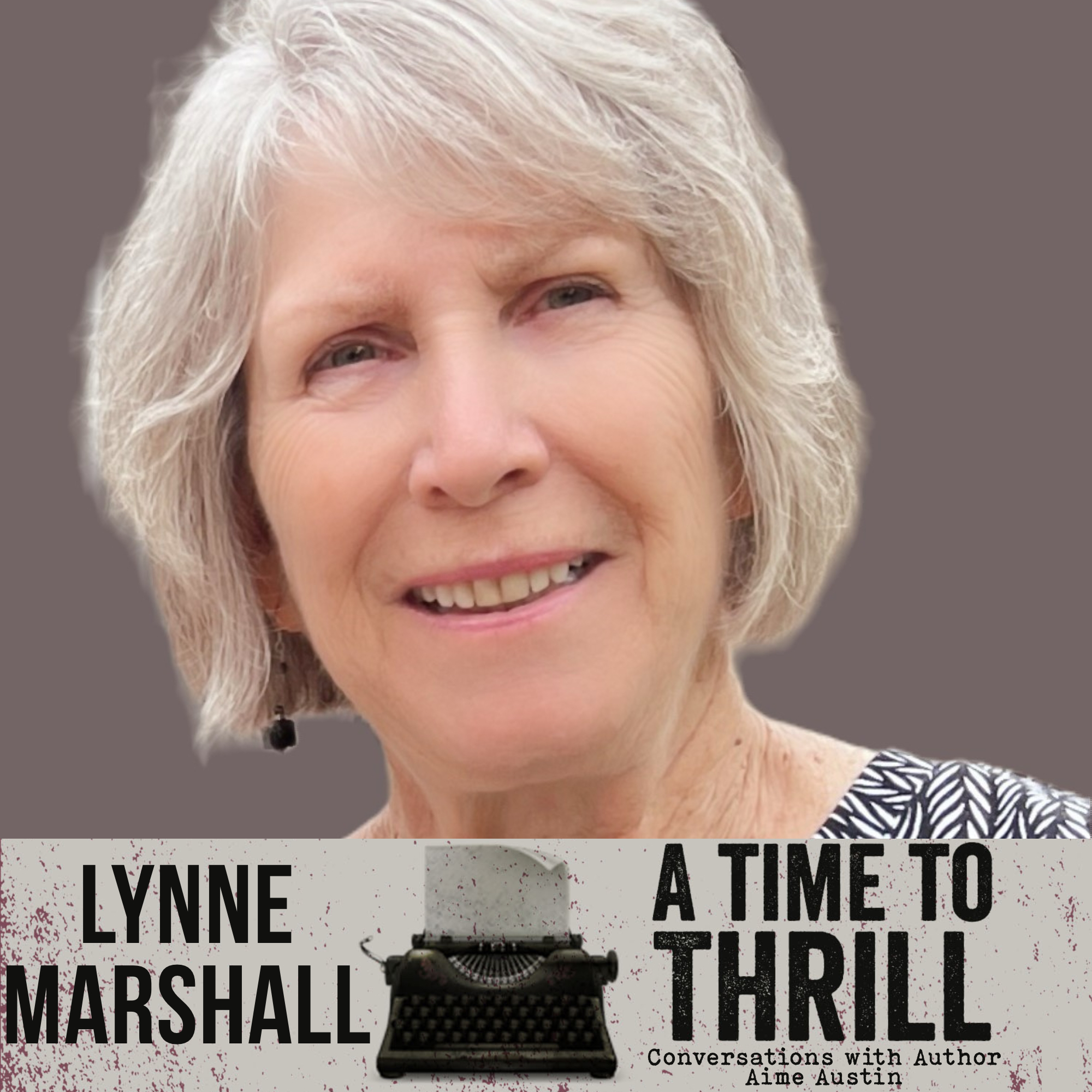
Episode Transcript
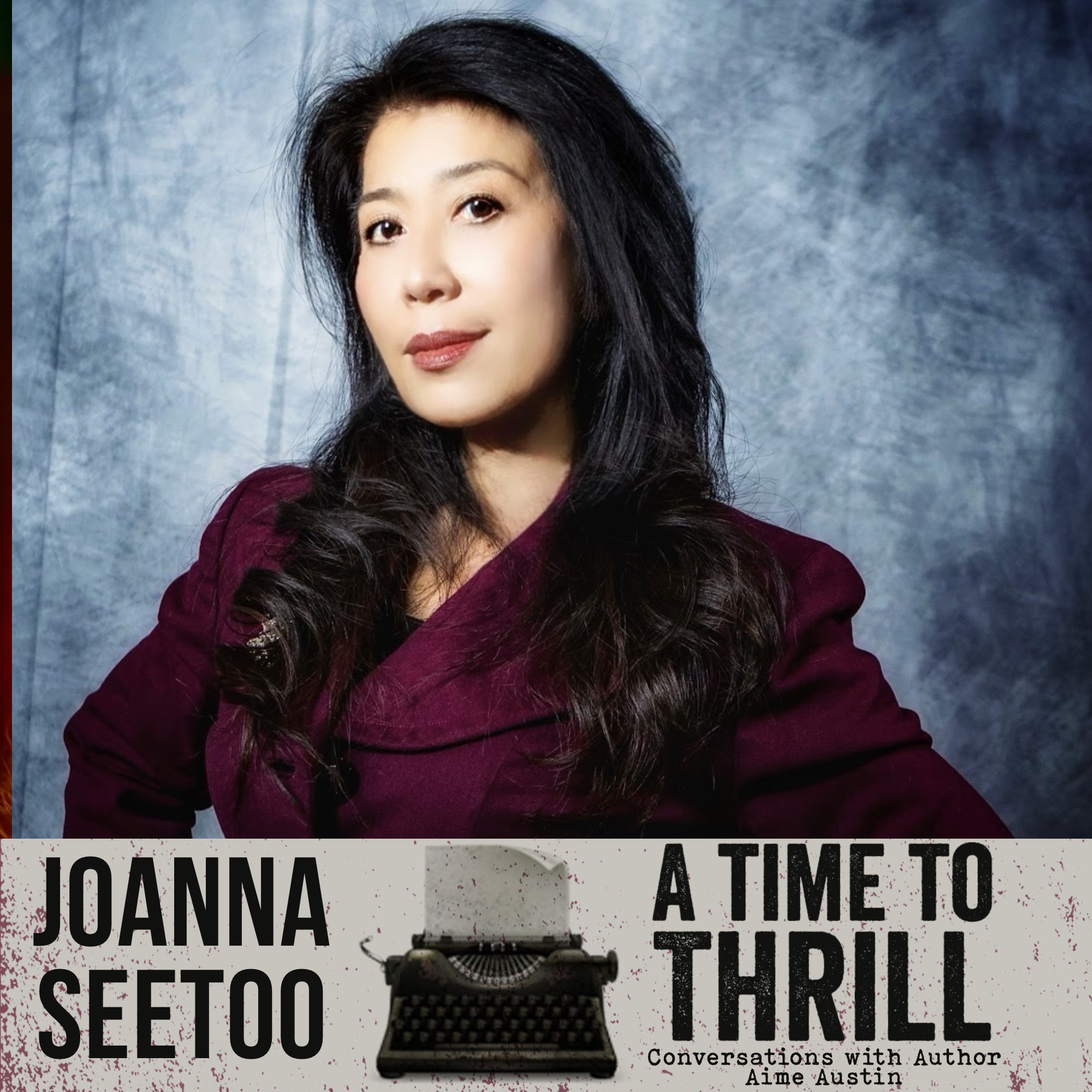
[00:00:05] Speaker A: Hi and welcome to A Time to Thrill. It's me, your host, Amy Austin. This month I have the delight of speaking with Joanna Joy C2.
So I just did the interview with Joanna and now I'm recording the intro because I realized we're gonna really need an intro.
So what I think we didn't talk about during the interview is Joanna. I kept Joanna in the divorce. No. So my ex's stepfather is Joanna's uncle. Oh my God. Right.
So I met her. When we talk about this, I met her in the 90s at a relative of the step stepfather's, one of his relatives houses, which would have been probably in Long Island. I actually remember. I. I have an absolute memory of it. So it's not a mystery. And then there was a wedding. Some people not married, and so.
[00:00:59] Speaker B: They'Re.
[00:00:59] Speaker A: Divorced now, but people got married. And so there was a lot of time I spent with the C2s. And they're like this delightful family that I love.
And Joanna, I love Joanna. I love Joanna since the 90s. And she's always had this super interesting life, but it's like family stuff. So I saw her at random family gatherings or like at her wedding for years.
And she. So we were either both in New York or here in California.
So from time to time I would see her like at family gatherings. Like, honest. I'm just gonna be honest. Like it's just a family gatherings.
And she was always living a big creative life and it was just like, oh my God, like she was always designing jewelry.
I. Well, I mainly have a necklace from her and it doesn't work with turtlenecks. Actually. I wear it often, but not right now.
And I really loved knowing her and I mean, I still know her and I see her from time to time, but she's in San Diego and I'm in LA. And believe it or not, that 80 miles is a big, big, big hump. It's a big bridge to cost because the traffic.
The last time I saw her, I drove down.
I was doing a writing, one of the beach retreats, to be frank. And I drove down and she drove up and we met for who knows, lunch, brunch, breakfast. I don't know, but she's great. But she's always been doing, and we'll talk about this in the podcast, these super interesting creative things. Like she's in the wedding industry. She's like flying to Asia looking at jewelry manufacturers. She's working for this big person. She's selling to Nordstrom, she's selling to Macy's. Apparently she's selling to Target. And it was always like, fascinating. And, you know, I'm sitting at home, it's like, what'd you do while I wrote a book? And she's like, jet setting, you know, But I really love people who live a big creative life, and she always did. But I realized, like, I mean, family gatherings you're talking about, I don't know what, but like, you're moving between people and people and you have like, different conversations.
But like the authors I know, this is the first time I've ever had like a long form conversation about her entire trajectory because. And like, the thing is, like, there's family photos that go around, like in family newsletters and stuff. So that's like, when I refer to talk about pictures and things like that, that's what I would have been referring to.
That's where I would have seen pictures of random people or like, at different gatherings.
But because clearly I'm black and she's Chinese, I don't think it would be a natural leap to think that we had been at family gatherings together. But that is certainly how I know Joanna. So I hope that you enjoy this interview about her big creative life.
I love it. I love her, and I think you will too.
[00:04:10] Speaker C: Before we dive into today's conversation, I want to take a moment to thank this episode's sponsor, Audible.
[00:04:16] Speaker A: You know how much I love a good story.
[00:04:18] Speaker C: I write them, I read them, and sometimes when I can't sit down long enough to open a book, I listen to them. Lately, I've been listening to Audible while I walk, travel, or even sometimes while cooking dinner. There's something about hearing a story performed that makes it come alive in a different way. I just finished.
[00:04:34] Speaker A: Okay.
[00:04:35] Speaker C: Julie Chan Is Dead by Leanne Zhang, an Alice Feeney book, Blue, Beautiful, Ugly, and the latest, latest Linley book by Elizabeth George.
[00:04:46] Speaker A: So I'm gonna be honest. This is how I do it.
[00:04:49] Speaker C: I get a book both on Kindle and on Audible, and I go back and forth listening to both. So when I'm driving in the car or with my son at some activity, I will listen to audiobooks. And then when I'm home, I read them on Kindle. And Audible makes it easy to switch back and forth in the app.
[00:05:09] Speaker A: Honestly, I do it every time. I just, I want to keep the.
[00:05:14] Speaker C: Book going while I'm driving. And so I just switch, switch to the audiobook, and then when I get home, I switch back to the Kindle because honestly, I can read faster than I can listen.
Anyway, the Best part is that with Audible you get a 30 day free trial. You can start listening today, get one audiobook you can keep forever even if you cancel. So if you've been wanting to read more stories that pull you in, won't let go, including my own Casey Court series, which are all available on audible, go to audible.com the link is in the show notes or in the alternative ebooks Buzz Audible.
[00:05:56] Speaker A: Hi and welcome to A Time to Thrill. It's me, your host, Amy Austin. This month I have the absolute delight of interviewing Joanna C2. Hi, Joanna.
[00:06:06] Speaker B: Hello, Amy. Thanks so much for having me.
[00:06:10] Speaker A: I was thinking about this when I was getting ready and putting on my like adult facing clothes.
I think I met you. I'm gonna say this is so long ago.
I don't know, like 94, 95.
Do you think?
[00:06:27] Speaker B: Yeah, I think it was even before because I think I met you maybe at Aunt Vicki's house.
[00:06:35] Speaker A: I remember that. I just don't remember the year. Like the 90s. Somebody asked me about the 90s the other day and I thought that's a lot of years ago people to ask me about something. So. Is that more than 30 years ago?
[00:06:46] Speaker B: Oh my gosh.
[00:06:46] Speaker A: Okay. Age is.
[00:06:49] Speaker B: But we were children, so it's.
[00:06:56] Speaker A: Okay. So Joanna's from New York, I'm from New York. That I mean. And okay. I have many questions.
Okay. I actually know some of the answers, so. But I'm asking for the benefit of listeners.
Where did you grow up?
[00:07:09] Speaker B: I grew up in lower Manhattan. Yep. Downtown.
[00:07:13] Speaker A: And what, where did you go to high school? Actually, I don't think I know this.
[00:07:19] Speaker B: So this is interesting. I wound up going to Brooklyn Tech even though I had planned to go to music and art and was accepted, but my folks wouldn't let me go to a non academic school. So of course I hadn't studied or anything and I wound up going to Brooklyn Tech. But there had been been a had race riot there while I was in at school and so they let me transfer out and I wound up finishing at this very progressive high school called City as school.
[00:08:02] Speaker A: Okay. Wow. I did not know this. I, I should have, I don't know. I don't know if this conversation would ever have come up before.
So you did you always want to pursue something artistic?
[00:08:16] Speaker B: Yes. I mean I knew from when I was really young that I, I was an artist of some sort. Right. Like I decided I wanted to do music. I sang for a long time, but I wound up doing a lot of art as well and love to do art. And even in junior high school, I thought it was such an honor, but they had me do the calligraphy for all the diplomas.
[00:08:41] Speaker A: Oh, my gosh.
[00:08:42] Speaker B: I know now people would look at it and say, child labor.
I was just like, of course I'm gonna stay after school and do all the calligraphy. This is so wonderful that they've asked me.
[00:09:00] Speaker A: Okay, that's okay. That's fascinating.
So this is the thing I always wondered when I met you. I feel like you were already designing jewelry, but I'd have to really think about it.
What made you choose that of all the things. Because you're the only person I know. I'm thinking, I know people who write. I know a lot of writers, obviously graphic artists, people who compose music, like, all sorts of things. But jewelry designing is, I don't say fairly niche because people. Other people do it, but it's kind of niche.
[00:09:34] Speaker B: So you want to know what really prompted me?
[00:09:37] Speaker A: Yes.
[00:09:39] Speaker B: So none of my friends, and I certainly wasn't with I like, a really solid boyfriend or husband or anything at that time. I actually, at that point, I had already split up with somebody. And all my friends, though we all liked really beautiful jewelry. We just didn't have the means for it.
And I felt, well, that shouldn't stop us.
And so I enrolled in a jewelry making class, which was a bench jeweler class, you know, where you're using the torch or using, you know, sharp objects. And I loved it. I fell in love with it.
I. From all the different disciplines I ever did.
Metal and stone were so innate to me. They felt so right.
And I just jumped deep into it, where morning, noon, and night, that's all I wanted to do.
[00:10:52] Speaker A: I want to say this. I've always thought of taking a jewelry making class, and I never. I was going to do it right before COVID and it just never happens. I don't think I have a passion for it. It just seems interesting. I'll say that. It seems interesting, but a lot of work, honestly. What. And I wasn't so good when I did metal in school when I was a kid. I didn't have the patience for it, I don't think.
So what were the first, like, pieces that you made?
I mean, I assume they were for you or.
[00:11:23] Speaker B: No, for my mother. I made very, very little jewelry. For me, I never got into that thing where I'm making jewelry. For me, it's always with somebody else. And in fact, my best pieces, I already have somebody in my head when I'm designing them, so I use other People as my inspiration. They're always my museum. And. And that's what prompts the.
The flow of coming out with something that is really beautiful and evergreen. And so my mother actually had a lot of my early pieces because I gave them to her. And I pretty much scared myself the last time we were in New York when I was just like, oh, my gosh, I was terrible.
Like, look at this. Look at that. That's set horribly. Oh, my gosh, look at that gap. That's not even. But.
And then some of it's like, gee, that was pretty good, huh? I was good at that. You know, that was kind of funny.
[00:12:37] Speaker A: But, yeah, I think about you, so I. So, so.
Let me share this with listeners. Yesterday, Joanna sent me a picture of the two of us from three years ago. And I was wearing the same sweater, which is a whole thing, but I was also wearing a necklace that you'd made. Oh, my God, this is so long ago. But I remember you went through. Because I bought two. One for me and one for a friend.
They were zodiac. Sorry, I had to think of the word.
Like, zodiac necklaces. And they had. I don't know, it was a Scorpio. It was black, so I don't know what the stone was. And for a friend, I assumed. I'm not good with zodiac signs. She was born in September, like a lot of people. And it was green, but I don't know stone. Sorry, I'm not good with stones.
And I really liked that. But you.
I feel like there's been many iterations, so when I met you, there were two things. I remember buying that, so. So you must have had a separate business. But my memory is mainly you doing wedding jewelry.
[00:13:35] Speaker B: Yes. That is pretty much the bread and butter of. Of my business. It always has been. I. I think for most fine jewelers, it is. I have certainly.
I mean, I even had a store in San Francisco.
So do you. You remember, did I see you in Colorado?
[00:13:56] Speaker A: Yes, I remember. So I remember. So this is the thing, like, years. Like, it's a lot of years to try to remember. I remember you being in Northern California. Right. But I didn't see you. I have been, obviously. I've been to Northern California many times. I don't think I ever saw you in Northern California. I think at the time you're in Northern California, I saw you in Colorado.
[00:14:12] Speaker B: That's correct. I went out to visit, and so I.
But I had my store, and, you know, I mean, people even got engaged in my store.
[00:14:25] Speaker A: Oh, that's fascinating.
[00:14:26] Speaker B: You know, so making those kinds of very, very special pieces for people, that to me is kind of the, the ultimate expression.
I, I don't, people generally don't come to me if they want very simple, like kind of Tiffany style rings. Because you don't need to go to a custom jewelry designer for that.
[00:14:52] Speaker A: I mean, no, I mean, and I.
[00:14:54] Speaker B: Told people that I'm like, I'm happy to do it, but you don't need me for that. You know, you need me if you want to do something very uniquely yours. I consider that if you're going to give somebody that gift of love, that really becomes a love letter between you two. And so I'll help you craft that letter into something that's wearable. But I want to make it very special to the two people involved. And so, yeah, bridal is, is very, very important to me. And part of it, it's because of all the emotion, because I think of all things, right? Like you bought a piece for your, your friend.
You would never give a piece of jewelry or buy a piece of jewelry if there wasn't love attached to it.
[00:15:43] Speaker A: Oh, that's so interesting. That's gonna, that makes me rethink the jewelry. Cause I was wearing, a friend of mine bought me a pearl necklace years ago and I wear it occasionally. She wears hers every day. It's a matching one. And I was talking to somebody about it and they're like, well, she must really love you. And I was like, oh, okay, yes, yes, exactly.
[00:16:01] Speaker B: And so being a part of that, you know what? I think no matter what, we could all agree that one of the things that we need more of is, is love in this world.
And so I am a big champion of that and a big proponent of, you know, let's get back in, into that space and show the people that we love that we do love them.
So having something tangible like that to me is really, that's a big part of what I do and why I do it.
[00:16:35] Speaker A: So let me ask you this, because I actually always wondered this. Why Northern California? Like when, I mean, okay, no offense, as New Yorkers, you know, we struggle to leave New York.
I mean, obviously we're both here in California now, but what made you. Because, oh, I'll tell you, I like the idea of Northern California. I mean, I've considered living there. I've just, to be honest, Southern California, I can't believe I'm saying this is cheaper.
[00:17:00] Speaker B: Well, okay, so here's the thing about going to San Francisco.
I was absolutely determined to work. I wanted to apprentice with a man named Stephen Kretschmer, who is really, the guy was genius, mad genius in, in our world. And the closest alchemist, I think that we had in our space. And Tiffany had given him a huge grant just to study exotic colored golds.
Now at that point, I had already been doing a lot of my own gold alloying and doing great colors. I was doing apricot gold and peach gold and chartreuse gold and, you know, really beautiful, beautiful iterations of what we think of in as, you know, using pure gold from the bank and then alloying it with copper and silver to create all of these different blends. But I wanted to know more. And Stephen was doing purple gold and brown gold and blue gold and, you know, really fabulous, far out things.
And to my absolute delight, he said he would take me on as an apprentice. I had sent him my portfolio, but he would not make me move to LA because he considered it a cesspool there. I'm sorry, I'm sorry.
[00:18:24] Speaker A: I don't take it personally at all. After 25 years, I don't know if I own that. I don't know if I own LA yet.
[00:18:31] Speaker B: And he, he. So I said, well, what should I do in the meantime? He says, you're going to go to my friend Alan Revere. You're going to tell him you're going to come work for me and he's to make you a good goldsmith. And I went out to Allen's and it's a long story, so I'm not going to get into it. But I created, I hand fabricated a class that the tolerance was so tight that in the 20 years that Alan had been teaching, he had never seen that when you put it together, it created a vacuum seal.
And he said, okay. He goes, well, the good news is you are really, really right on the mark. Like you're measuring and your, your skill is really good.
The bad thing is it doesn't work. So you have to cut it apart. You're going to start again and make a new one.
Anyway, I, I was kind of freaked out because it was just a workshop and I didn't have that much time. But I wanted to make more pieces, I wanted to learn more techniques and it was, I loved it there. It was so fun and creative and Alan was an amazing instructor. And so I finished. He bit passed. He taught me one other technique I wanted to learn, which was anti classic.
And before I left, he offered me a full scholarship.
He says, I've never done this before, but for some reason I feel compelled That I want to train you and I want you to move to San Francisco and work with me.
And so I went back, I used that anti clastic technique that he taught me. I blended it with my favorite technique which was high carat gold granulation.
And I won my Spectrum award that year which was a huge honor and so from the American Gem Trade Association.
And so I thought that that was a really, you know, it was a great opportunity to go and learn from him and train with him. And so that's how I wound up in San Francisco. And then I wound up becoming the assistant director of the school and teaching for him.
[00:20:57] Speaker A: That part I remember. The other part I don't think I knew how many years were you in San Francisco?
[00:21:02] Speaker B: So it was a good five years.
[00:21:06] Speaker A: Okay.
[00:21:06] Speaker B: Yeah. And I wouldn't probably not have left right. Because I had opened up the store if Gwen's mom hadn't passed away. And my dad asked me to sell the store and come back to New York.
[00:21:20] Speaker A: I mean I remember, I'm sorry, I remember all of this. It's just they're not to me, they're not for you obviously they're connected events. I had not thought of them as connected.
It was just oh she's going to come back. But well now I think about it. Okay, sorry. I just didn't connect it in my head because that was she was she. Oh my gosh, she was so young.
[00:21:40] Speaker B: Three.
[00:21:41] Speaker C: Yeah.
[00:21:44] Speaker A: Yeah. I'm thinking about the pictures from back then. Okay, so then when you went back what was your focus then work wise like what was your plan?
What was your second plan?
[00:21:57] Speaker B: I guess so I wound up. This is so crazy. You know it's. It's always the relationships you've made.
There was a, a gentleman who I knew from San Francisco who his father was the one who came up with the process for creating lab grown emeralds.
And that's the Chatham I was just reading about. This had the best lab grown colored stones bar none.
And Tom needed somebody to run his office in New York so I had taken a little break just because it was so hard going through that loss. I wound up joining. James took me in as to do recruiting and I, I actually really liked that. You know it was, it was great because I would just get to talk to people all the time and you know like find stuff out and cool. But I was ready to go back into my own field and so I managed Tom's New York office in 585th Avenue.
And from there he introduced me to his best friend who was opening a new company that was funded by a gentleman named Lorenzo Yee, who was quite a big, big player in the jewelry world.
The guy was the first fully functional mine to market company.
And so he owned the gem mines in Brazil and then he had manufacturing in China.
And he serviced everybody from mom and pop stores all the way to the high end to all of the mid tier, everything. It was a whole part of the industry that I didn't know about.
[00:23:52] Speaker A: Okay, but that sounds so ahead of its time.
[00:23:55] Speaker B: Oh, he was the first.
[00:23:57] Speaker A: Okay. Because, like the way it's this. I mean, it's the three different. Okay, yeah. Okay.
[00:24:02] Speaker B: And so I am coming from this very, very, very, very curated small part of high end American jewelry design.
You know, where it's all about awards and it's all about one of a kind pieces. Right. I had been doing one show in Aspen, one show in the Hamptons, you know, some.
In the meantime, I'm just like making pieces, doing individual pieces for stores, painting like, you know, renderings and stuff for people, doing one of a kind things. And here I meet somebody who is pumping out like thousands of skus, You know, And I realized it's like, oh, this is actually how the industry works. All the other stuff is definitely the icing and it's wonderful and beautiful and that's the art of it.
And. And then the nuts and bolts of it are. Are this whole other process.
[00:25:11] Speaker A: Oops.
Okay, so that's. I'm sorry. That's really fascinating. Like, that's.
Oh, I have so many questions. Wait, did you ever visit Brazil?
[00:25:21] Speaker B: I didn't. Never got to go to Brazil to see the mines, which is very unfortunate. I did wind up representing Lorenzo on the shopping channels though, eventually, and going out to Europe to represent him there. And then here in the States, I was on shop in NBC. They don't call it that anymore, but you can only. They contract you per country, so you can't be on multiple channels.
[00:25:50] Speaker C: Okay.
[00:25:51] Speaker B: Yeah. So they were like, okay, we want to go with this one and we'd like you to be on tv. So I was designing for them. I was doing merchandising. I was helping them write, you know, marketing copy. It was really fun. It was great. I did sales.
[00:26:07] Speaker A: It's like everything. I mean, it's the whole thing. It's the whole shebang.
[00:26:10] Speaker B: Yeah. Because he had so many different divisions and different lines. So, you know, I worked with different aspects of his company and I learned a ton from working there.
[00:26:25] Speaker A: Okay. I didn't know all this because I just you know, you see pieces, and then you're working here and then you're working there, and then you're doing. You're living your life as well.
Okay, so.
Okay, so then what came after that?
Because in my head, it was San Francisco to San Diego, but I guess there was some. No, that's not true.
[00:26:46] Speaker B: Yes, it was San Francisco, New York to San Diego. Okay, you are right about that. And then I.
I wound up.
Yeah, so. So this is. I'm just on. This is a personal thing. But I wound up getting married. And.
[00:27:04] Speaker A: Well, I remember your wedding. I took the train there. I was thinking about it the other day. Somebody's asking about that, and I took Amtrak down there.
[00:27:12] Speaker B: So he asked me to leave my. My job.
He didn't like how much I traveled. And.
And so, you know, this is.
This is a little wisdom learned, you know, like, don't give up what you really love. And somebody shouldn't ask you, I think, to give up what you really love.
But. But, you know, we all learn our lessons.
And so I left jewelry.
I left jewelry for a while. And. Yeah, I have my thoughts.
[00:27:49] Speaker A: I mean, I remember. I remember.
[00:27:50] Speaker B: I remember. Yeah. No, I bet you. Yeah, you should have. You should have pulled me aside and. And.
[00:27:55] Speaker A: Well, you can't say anything. I can't. We're gonna have this tangent because I remember I was actually just thinking about when I was getting dressed, and I was like, I remember we went to that restaurant. He sent back the bottle of wine. Like, I have all these memories, but I remember.
[00:28:08] Speaker B: Oh, yeah, you took us out to that beautiful restaurant.
[00:28:11] Speaker A: I think it's called Providence. I don't even know if it's still. It's actually just down the street if it's still here. It's like literally a mile away from here now. Melrose. But I remember that I had thoughts.
[00:28:22] Speaker B: Because I.
[00:28:24] Speaker A: I guess I'll just say it now. Maybe I'll cut it out later. I felt like he didn't like your ambition, and he had the band or the music or whatever. And I'm not saying whatever to music. I'm just saying whatever because I didn't know a lot about it, and I.
I felt you were a bigger light than him.
But you can't say that because it's like.
[00:28:45] Speaker C: How do you say.
[00:28:45] Speaker A: Like, that's not. That's kind of rude, you know, it's like, oh, you have a big light. You know, Like.
[00:28:54] Speaker B: Yeah, I think what it was is that, you know, I was helping him a lot with his career, and so he wanted My energy forward in that direction and not in any other direction.
[00:29:07] Speaker A: No. And I, I think about this often, so I know a lot of writers who.
Okay, there has been a. A gold rush in, like, indie writing, let's say, over the last 10 years. It's. It's over that. That ship sailed. But during, during the time, it was like, let's say it's 2012, to, like, I don't know, 2022.
So during that time, there were a lot of people I know where everybody in their family, like, quit their job in order to propel them. Because if you're selling like 10 or 20 million copies, it's a huge business to run, and the person who's writing can't also be like, designing your thing and getting your airport kiosk set up. You know what I mean? Like, that's.
So I, I don't say I was envious, because that's not envious, but I really admired families who went all in because, like, the millions were coming in who. They went all in, and they're like, this is going to be the family business right now. We're all going to go all in.
While I admire that, and there's something to be said for that, and I do wonder about, like, contracts and relationships, and I've talked to some people to some degree about that, but, like, it's not my business, you know, I don't know.
While I admire that, I don't.
I worry about.
And in most of those cases, it wasn't like they quit their creative thing and stopped their whole life to do that. It was, let's put all hands on deck so the money can keep coming in.
But I. So while I admire that, I think that I worry about, and especially women and living in la, I know a number of these people where their creative thing gets derailed because they're putting. They're pouring into another woman. And it happens with a lot of movie directors, movie producers. These are people I actually know personally. So I. And I have feelings about that, you know, and he's at the Emmys and he's at the Oscars, and she does not.
So while, while she's doing the things to help prop it up, there's no recognition for them.
[00:31:12] Speaker B: Well, here's the thing, though. I was the breadwinner.
[00:31:14] Speaker A: Right.
[00:31:15] Speaker B: So I was still the breadwinner no matter what. And. And so I just rather have been the breadwinner doing something I really loved rather than something that kept me traveling.
[00:31:30] Speaker A: Yeah. So you. I feel like you weren't. I don't want to say. You weren't married for long? It felt like a few years. And then.
[00:31:35] Speaker B: Then that was actually we were. We were married for a while and.
Yeah, we were married.
Yeah, I mean, I guess for six years.
I know, not super long, but long enough.
[00:31:55] Speaker A: Long enough.
So then what? Then how did you get back into jewelry? Because there was a pause and then you were back. You know what I mean? You were back.
[00:32:05] Speaker B: So when I came back, that's when I started Wishcraft.
[00:32:10] Speaker A: Okay, I remember that. Okay, I remember that.
[00:32:12] Speaker B: And it was the genesis of that is. So when I had started making jewelry, even before I moved out to San Francisco to study with Alan, I used to do something called wish rings.
And I had a little symbol of a little like booklet of symbols that I would work with. I hand drew this little lexcon and the symbols and their meanings because symbols have always meant a lot to me because I feel it's a universal language, right? Like birds or wings will mean pretty much the same thing across every culture.
[00:32:50] Speaker A: This is true.
[00:32:51] Speaker B: And so all of these different very threads that tie through all cultures, these are the symbols I'd work with.
And the idea was. And then inside you'd get to pick a mantra that I would engrave inside the ring.
You would pick however many symbols there was. You know, you could have it wrapping around. You could just have three across the top, the gemstones that you felt were really strong for you.
And I would basically create this talisman that you could focus what it is that you wanted. I was probably more into manifestation before manifestation became a thing.
And. And so this was. Yeah, this was like 1990, 91 or whatever, like getting really, really in love with this. And, and I did these by hand and.
And people started buying them. And my most famous client who bought one was Julia Roberts.
And. And she did get her wish from that.
And so I decided, you know, from family, friends, people encouraging me, like, you were so ahead of your time, why don't you bring that back?
And so I went into the deep dive of really working with that whole concept again, but broadening it out, right? Because by now then, you know, the whole crystal thing had become like a big thing. And I knew a lot about energy and gemstones and, you know, all, all of that.
And then I wound up writing a book, right, that came out, had a lot of that in there.
And that took me back into making jewelry.
[00:34:52] Speaker A: How long was your hiatus then?
[00:34:55] Speaker B: So it was through.
It was. It was the second half of.
Want to say I stopped for a couple of years.
Yeah, I stopped.
[00:35:11] Speaker A: Did you miss it? The. The.
The. I don't know. Did you miss it? The. Not all this stuff around it, like marketing and all that, but did you miss the handicraft? I guess.
[00:35:21] Speaker B: Yes, I definitely did. I never stopped completely. You know, you're always still. Somebody comes to you and they're like, oh, would you do this? Will you make this? Will you. Hey, you know, so, yeah, it's like, of course. Especially if it's somebody I really like and know the. You know, I'm not gonna turn them down.
But then in New York, right, I had moved back to New York, and then I got my position as the director of bridal at Nina.
[00:35:48] Speaker A: I remember this. I remember, like, it's all coming. Yeah, I remember that.
I remember that because that was. Yeah, it feels like that was the height of the.
[00:35:58] Speaker C: Not the height.
[00:35:58] Speaker A: I'm sure it's still big. I'm just out of it. That was like the. When, you know, when weddings went from being a thing to a thing.
[00:36:07] Speaker B: Oh, yes. Because I worked with a lot of the TV stations that were doing, you know, all the bridal. The wedding shows and things like that. I. I supplied a lot of them with their jewelry.
And I will say I had never, ever been in that situation where you're expected to create that many designs, because it's not fine jewelry, it's fashion, right? And so you're on a fashion cadence. You're on that calendar. And so there were four lines. Four lines a year, and each line had to be tailored down to at least 30 pieces per line.
And you were building for mass. Like, we. We were supplying all of the big stores as well as smaller bridal stores.
So, you know, obviously, like, if you're selling to Macy's and Amazon and Nordstrom, and I was doing private label. I was a private label for beholden, you know, And. And, you know, so it's like anthropologies. Like, they're not.
Oh, we only need to.
[00:37:20] Speaker A: Yeah.
[00:37:22] Speaker B: I even did private label for Target.
[00:37:25] Speaker A: Oh, my gosh.
[00:37:26] Speaker B: For them, you know, it was just. It was amazing. It was an amazing time because it forced me to be a better designer than I'd ever had to be before because there's no real time to just sit and deliberate over a stone or, you know, this, like, this little detail. Oh, they want it. No, the filigree is to be a tiny bit tighter on that. No, it's.
You need to just get out more styles.
Just jewelry.
Because I'm doing head pieces, I'm doing sashes. I'm doing veils. They. I had to do hardware for handbags for shoes. Like, it was great.
I. I absolutely recommended. I recommended it to all my students. Like, push yourself forward to. To go outside of what you think it is that you do, because when you come back to what you do, you'll be so much stronger and so much sharper and so much faster, because.
[00:38:32] Speaker A: The flexibility, like, the brain, like, literally the brain elasticity to, like, be able to work at that pace.
So did it.
I don't know that I looked at it. Like, I remember you, like, send pictures, and I was like, that looks hard. Like, that looks.
[00:38:46] Speaker C: Like I.
[00:38:48] Speaker A: It looks hard. Although I do know writers. Like, I.
Okay, so there's, like, two kinds of writers. There's people who, like, write one book, like, every five years, and they think about every word and every sentence and the punctuation and all that. They have their place. I don't know a lot of them, but then there are people I know who are, like, you know, like, at the time, writing for Harlequin, and Harlequin's like, when's the next thing? Did you just. Oh, you produce it. Okay, tomorrow. Exactly. Because we.
We have a hole to fill, and it's, you know, where's your April release? Where's your. Like, you know what I mean? It was just.
And those people, and a lot of them I know now, I was actually just talking to one the other day, became much better writers when. When they got off that treadmill because they had really figured out what.
What the elements needed to be and how to do it quickly. But. But going in and for everybody I know who did that, because nobody starts out that way going in, they were very intimidated. I mean, there's a lot of, like, they'd be online. I was going, you know, it's like, oh, my God, like, what have I signed up for?
[00:39:48] Speaker B: I love a good challenge, right? So throughout life, I feel that the challenge is where the opportunities are, and.
And it's an opportunity to grow and expand and learn, right? And so it's like, we're all here, I think, just to keep elevating whatever it is that we do and help other people along the way.
So I.
I embraced all of those different opportunities, and it was the first time. Then I opened up global sourcing for them for this department.
And so I was going out to Thailand, Hong Kong, and China a couple of times a year to work with the factories, right? Because it's, you know, funny enough, right, because, like, the whole thing now about bringing manufacturing Back to the States. And I remember my buyer at Nordstrom. I was like, you know, I. I create everything right here in North America. She's like, and I don't care.
That's really nice. She goes, but unless you can meet a price point, like, you can if you're producing over in Asia, I don't care. And neither do. Do my customers. It's like, notice I never got it.
[00:41:01] Speaker A: I heard you. I heard you. Okay, so. Oh, I have so many questions. Okay. What did you think of? I mean, I've been to China, but not a manufacturer. What did you think of the manufacturing process?
[00:41:15] Speaker B: Well, so one of the things I was really.
One of the highlights of being at Nino was that I.
I developed a relationship with Swarovski.
And so I got my.
I got the invitation. I became a designer with. For World Jewelry Facets.
So that's very, very curated. Select group of designers that Swarovski just feels, you know, have a certain aesthetic. And it's like, oh, I'm in a book with Oscar de la Renta and Chen Liu and, like, really pretty famous people now. And bringing that to the company that I worked for was really special.
But I designed the piece that was going to get submitted to World Jewelry Facets while I was on the plane going out there. Oh, my God. Okay. And when I landed in Hong Kong, my Swarovski rep, I said, I need to buy all the materials so I could do the sample while I'm here.
And so she took me to the jewelry district in Hong Kong, and I bought all the pieces that I needed, the chain and everything.
And then when I was in China, I brought that with me to China and to one of our factories that did our leather accessories and showed them the design. I drew it out in my hotel room, and it's called the Phoenix. So because the company is not really a jewelry company per se.
It's leather and then all Swarovski chain.
[00:43:04] Speaker A: Mm.
[00:43:05] Speaker B: And so they. At the factory, those. The guys were like, it'll never work. It's going to tear right through this leather. Because the leather you want to use is this really nice deer skin. And I'm like, it'll work.
We have to get the balance right. And I know how to do that. And so I had gotten the D rings for that, and I knew how to position it so that it wouldn't ever tear the leather. And I built that in the factory on my translator.
[00:43:39] Speaker A: Oh, my gosh.
[00:43:43] Speaker B: And so then, like, you're incredible. Like, what an engineer you are. That this would work. And I was like, well, thank you. But, yeah, I never had any doubts.
[00:43:53] Speaker A: So then, but then the reproduction of that, how much supervision is there to reproduce it?
[00:43:59] Speaker B: So that after samples done, like, that's what's really good about factories, is that if you have a factory that is, you have a good relationship with, they don't need a whole lot of supervision once they have something to mimic.
[00:44:17] Speaker A: Okay.
[00:44:17] Speaker B: And so they, they got all the materials then to make the subsequent pieces. And there weren't a lot made because Swarovski would only, you know, they give you a budget for how much. And these are to go on tour. They're not to be done commercially. And then my company, you know, had a big fight about whether we create these or. Or not, that they're very, very. They were very high end because of the amount of Swarovski used.
And so they chose not to create this. And I didn't want to do a stripped down generic version because it would lose its impact.
[00:44:55] Speaker A: That's a whole.
Yeah, yeah.
[00:44:59] Speaker B: But, yeah, it was definitely. It was one of those ones that became a pick for the knot.
And I remember Randy Finoli from say yes to the Dress by the Bridal show. And he was like, I have been looking all day for this piece because everybody is talking about this.
And he goes, it's phenomenal. He goes, I. He goes, kudos to you. Congratulations for doing this. And I want to tell you, if I were you, I would sit at home on my couch watching tv, wearing just this naked. Just wear this.
[00:45:42] Speaker A: Oh, my gosh. So how did you find the wedding industry? Because it's very.
I don't know, it's changed so much. I don't even know what it is now, but it's very.
I don't know, it makes a lot of money, but it has a high. I don't say a high demand. A very particular kind of demand.
[00:46:04] Speaker B: Well, yeah, because every detail is so precious.
Right. The stakes are very, very high. I think people are very.
There's so much anxiety around having the perfect event. You have to look like the perfect person.
You are your idealized self. Myself, on that day, I, for me, my.
My job, I always feel is because I was a makeup artist, you know, like, I worked doing hair and makeup in, in my teens. Right. And I, I always felt that no matter what, you should feel your most beautiful.
However way it is, however way you decide to translate that on this day of all days, hopefully you can take that and feel that way throughout your life.
But when you can Embody that vision of yourself, because we all have a vision of who we are and how we project into the world. If you can take that and distill that into something that is uniquely yours and just the pinnacle of who you are, then you're. Then I did my job to help you get there. Right. And that is always the thing of. Of trying to raise somebody up to feel that way, because when you feel amazing, you are way, way better, and you're going to be better to everybody else.
And so, you know, again, it's just like, in the way every way that everybody can, because we all have our own toolbox of. Of trying to help people be their best selves is. Is what, to me, it's all about.
So, yeah, if somebody wants to feel glamorous, I want to help them feel glamorous, so.
[00:48:02] Speaker A: Well, okay, that said, would you do it again? Would you go do wedding stuff again?
[00:48:06] Speaker B: Yes, I totally would. I mean. And so now with House of Joy, right? I. I'm. That's so. You know, I don't. Did I tell you how that started?
[00:48:17] Speaker A: No. No.
[00:48:18] Speaker B: Okay. So when James passed away, dealing with all of the grief and all of the estate stuff, and Gwen decides to ask me to create an engagement ring.
And, you know, I was really.
[00:48:38] Speaker A: I feel like I saw her proposal photos. It's not.
[00:48:41] Speaker C: Where was.
[00:48:41] Speaker A: Okay. I have a vision in my head, right?
[00:48:45] Speaker B: She'd been with Ebony for a long time, and they. She had planned to do this proposal when James very suddenly passed. And so she couldn't backstroke on any of that because they had already planned this trip to Hawaii.
[00:49:02] Speaker A: And.
[00:49:03] Speaker B: And I didn't have. She didn't give me much time. She kind of, like, just threw it on me. And if it had been really anybody but Gwen, you're out of your cotton pick of mine. Like, this is not gonna happen. Like. And you have a lot of nerve asking. But, you know, I. I mean, that's my baby, right? So it's like, I'm not gonna tell her no.
[00:49:25] Speaker A: And.
[00:49:26] Speaker B: And it pushed me into making an engagement ring of which came out really well.
And her friends started asking her to ask me to make them rings.
And so we're in Pennsylvania taking care of another estate thing.
Just, I don't know, like, the middle towards the. In the fall of this past year.
And she's like, you know, we should have started a company a couple of years ago. And I was like, why do you want a company? And she goes, well, yeah. I'm like, okay, let's do it then. And so that's how we started House of Joy.
And so, yes, we're back in bridal.
Not in the same way. I'm not doing.
I'm only. I'm still really basically doing. I'll work with other stones, but it's mostly. It's mostly diamonds and. And fine gems.
[00:50:26] Speaker A: Okay, so I have questions. So wait, how old is House of Joy?
[00:50:31] Speaker B: Started basically in September.
[00:50:33] Speaker A: Okay. And so it's.
[00:50:35] Speaker B: It's young.
[00:50:37] Speaker A: What is it that you want to do? Okay, how can I say this?
2025 and 2026 is very different because social media is different. Like, it's a different landscape than the 90s, the 2000. I mean, the landscape is different in a lot of ways.
So how is it going to be different? You. Do you think you'd ever do a storefront again or. No?
[00:50:59] Speaker B: No.
[00:50:59] Speaker A: Okay.
[00:51:00] Speaker B: I don't myself doing that. I actually hated having a store. That was a foolish step on my part of not going to work in a store before deciding to have a store.
You know, I'm like, oh, yeah, I'm going to have my own gallery. It's going to be really fabulous. It's like, oh, I actually don't like getting stuck any place.
[00:51:26] Speaker A: It.
Yeah, you're not the first. I mean, I've. Yeah, you're not the first person I've met because the idea of like, like even a boutique, and you're like, oh, I can design the fashion and do all this stuff, but you're actually like stuck in like, and four walls and four tiny walls. I mean, unless most. But you know what I mean? And it's. It's a lot.
So what. So do you plan to, like, then really use, like, social media marketing? As for.
Do you. How big do you want to be? Because the sky is always the limit, but then you have to manage the sky.
[00:52:03] Speaker B: Right? I.
I mean, eventually I think I would like to see House of Joy become kind of a lifestyle brand because I.
There's just a lot of opportunity for it to grow and expand in a couple of different ways and still stay in. In the wedding and event space and on. In the meantime, you know, I.
From working at GIA and I started to realize that I love mentoring.
I got to work with so many students and help them and help them win awards and overcome a lot of fear, get more motivated, really cull their ambition and, you know, take very realistic next steps that have seen them grow and like, start to really earn success. And. And so I. I'd like to do more coaching and more mentoring as well.
[00:53:15] Speaker A: Okay, so I have a different question.
Well, okay, so I will say this. I will include the link in the show notes for your Instagram and other socials for the House of Joy. Okay, I have a different question because I. Okay, I've been thinking about this. I don't even know how it came up. What are your thoughts on manufactured stones? Because you were the manufactured colored stones came before diamonds and now, okay, this is a US thing. Because I do know in Europe people do not. They're not, they're still not. They may come because America has a big influence and they're like very big stones.
But given the preference for very large karat stones and the cost of very large carat stones, manufactured stones have become more popular. I don't know the percentage. I looked it up a couple weeks.
[00:54:06] Speaker B: Ago, but I don't remember tell you actually pretty closely.
I am very egalitarian as far as materials go. I am no longer a stone snob.
I, I don't judge people. And a lot of that came from understanding that people need to feel good and they need to feel special.
And, and so I, I would never, I don't, I don't sticky note anybody with anything.
I, I don't have an issue with lab grown diamonds just like I didn't have an issue with lab grown color. Lab grown diamonds have actually been around for a long time, like a really, really long time. They just couldn't do really nice gem quality ones.
So more, more over the last, you know, certain years, especially in size.
And I think that the chemical composition is exactly the same, so they perform the same way. So you get the same beauty when you see it. And, and so if you feel like you, for whatever reason you want an organic stone, well, by all means have an organic stone if you feel that you want to put your money elsewhere.
And I am also very practical. And I always say, hey, you know what? Don't forego having a house or a new car or something, other things you might need for the sake of a ring.
It's, it's not a. Diamonds are a lousy investment anyway.
[00:55:50] Speaker A: I know somebody was telling me about. I did not know there was a resale. I only learned this recently that there's a. I don't call it resale market. People go to jewelers to upgrade their stones and so they'll pay like 50, but they can only sell it for 7 or whatever it is. And I was like, oh. I was like, that's worse than a car. Like, that's a fall off in value. Although I actually couldn't figure out why, why is there such a fall off?
[00:56:14] Speaker B: Because, because it's hard to. It's. There's just. No, not a great resale I will tell you. I mean back in the day like when dealers would have, somebody would come to them, they needed to liquidate or maybe they, they did size up then they would have a stone for a good price. Right. Because they didn't pay a lot to take it back or take it from somebody else who, who had it. And you know they, they probably didn't get a lot in their trade in. And, and so I was able to snap up stones for my clients at a really great deal, you know, because there's nothing, I mean it's, it's still a diamond. It's not my shoe or something, you know.
[00:57:08] Speaker A: So. Oh my God. So then what is the demand? I mean do people.
[00:57:15] Speaker B: Of engagement rings are being, are done in lab?
[00:57:18] Speaker A: Wow, that's.
What do you think is going to happen to the market then? I have so many thoughts about.
[00:57:25] Speaker B: Market has completely changed completely natural diamonds are much less than they were except in much higher sizes and grades.
Those are still rare. Those will always be rare and so they'll command a good price. But your regular one carat stones, half carat stones, maybe even one and a quarters, they're much less than they used to be.
And but lab grown is also very, very economical too.
[00:58:04] Speaker A: No, I heard that the price had really gone down in the last few years on that as well.
[00:58:09] Speaker B: Yeah, I think they're producing too much. I think you know, there's a certain level, I've noticed this in the industry.
[00:58:16] Speaker A: Where.
[00:58:19] Speaker B: Almost like the Autobottos, right. It's like it just kind of eats itself because people get very short sighted. They're very short term in, in their thinking. And so instead of realizing you're, you're going to actually pull the bottom out from your own industry, they just always, they're kind of looking for a quick, quick buck.
[00:58:44] Speaker A: That's true in so many industries. It's, it's so many, so many. So then what when, okay, so then now when you're designing and procuring stones, what kind of conversations do you have about what people want? I mean, I don't know.
I only learned about this like I want to say like three weeks ago and then I went down a little rabbit hole and then I got out of it because I don't need the knowledge for any purpose in my own life.
So what are people looking for now? I only know about it because People were talking about it in terms of having very large stones. And I, and I don't know if that's celebrity driven because I live here. So it's hard for me to like have any, you know, sense of things.
[00:59:28] Speaker B: No matter what. Right. So if you are in your friend group, right, let's just look at this almost on a psychological level.
And if at one time the average was as Everybody got a 3 quarter carat or let's say half a carrot to one carrot, one carrot was considered like a hallmark, a high hallmark depending on how old you were, what you know, your flexibility was in your financial situation.
[00:59:55] Speaker A: And.
[00:59:58] Speaker B: And if so if you were a gal and you got a one carat, well you did, that guy did great or whoever got that ring did great.
But as it changes and so now if everybody in your sphere are, are starting out at two carat stones, well, your one carrot is going to look a lot smaller and your, the mind starts to compare almost no matter what, right. It's, it takes a very, I think very secure person or person who never does the comparison.
And so human nature says well I want that. And that doesn't, that no longer looks big because everybody else is doing it.
And so I want that or a little more.
I think humans are kind of wired, right? Like there's that bigger, better, faster, more mentality, especially in this country.
And so that in itself kind of steps in.
And I find clients who are okay with going a little bit smaller in their stone, like in their center stone. Usually though we'll ask for more of something else.
They want more design on it. You know, they, they want other details that make the ring unique and special.
Customization is a very big one right now. So.
Nice.
[01:01:42] Speaker A: Oh my God. I just, okay, I just had this thought you had, you must have had an Etsy store at one time.
[01:01:48] Speaker B: I did because. Is that how you bought your piece?
[01:01:51] Speaker A: Because I, I, I, I had never heard of Etsy before you.
Because I live in a basement and well after you, it started a little addiction. I love Etsy. I can't, I need to, there's always something in the car and I need to close the thing because you can have anything unique and I love unique things and you can just have like all sorts of unique things. Unique, like computer cover, like unique. Oh my God, unique everything.
I bought sneakers once we like completely customized.
So I went, Etsy's blocked on my computer. I'm gonna be honest. So.
But what were you doing?
Okay, but it was the early days of Etsy because I Literally never heard of it back then.
And what made you choose like that venue at that time?
[01:02:39] Speaker B: It was very, it's, it was very open ended. So, you know, you could just put your things up there. It was very low cost, you know, to have a quote unquote storefront. You didn't have to really do much grooming. I'm not very techy, so like having a website that was fully functioning with a shopping feature that wasn't, I wasn't going to have that capacity to build that.
And so Etsy gave makers who were makers and not tech people a great platform and really easy, easy merchant services to work with. And so I, I did like that, what I hated. And I realized, you know, just like the same thing, you know, it's always a learning. Like I said, I don't like being tied to four walls. I also don't like standing in line at the post office all the time.
[01:03:41] Speaker A: The ebay people knew that because I, I remember you'd go to the post office and the ebay people would come in with like a bucket that they borrowed from the post office and stand there, go package by package by package. I remember that.
[01:03:52] Speaker B: Right, yeah. And then people are like, oh, you just buy the machine and do that. I'm like, yeah, I just don't know if this has my name on it. You know, I'm, I'm learning that there's certain things I really, I, I feel good about doing and other things that just kind of make me not happy. And so that's one of them.
[01:04:14] Speaker A: Okay, sorry, that was a tangent. I just remember, I don't know what came into my mind. So where do you do your jewelry making now?
[01:04:21] Speaker B: So now that I moved, it's funny that you ask, right? Because somebody else was asking me. I, a gal that I had done a ring as a favor for her friend, after seven years or so of wearing it, caught the, her engagement ring in like a drawer and bent the head of the ring, right. The crown of the ring. And so I went to find somebody who is in Redondo beach to, to fix this ring and they're like, why don't you just do it yourself? Because my bench is in storage.
I moved miles in storage.
I can't.
[01:05:09] Speaker A: Are you getting back to it then or.
[01:05:11] Speaker B: Yeah, I have no room here. And so when I'm designing pieces now, I am in this position of working with other people who can actually be my hands.
And, and to a certain degree I've done that for a while because it's like I'm not casting in, in my own place. I, you know, I always like to send those out anyway, things like that. You know, I, I do definitely feel that I like to work with the best people available, and I'm not the best at certain things. And so, like, I'd rather work with a diamond setter who, who is superb than have the ego to say, like, no, I have to do it myself, so I'm gonna do it not so beautifully, you know. Like, you're gonna live with that? No.
[01:06:06] Speaker A: It's true. Like, it's.
As an adult, how can I say this? I. What did I say to. I say that I like, oh, I sub that out. Like, I sub that out. And so, you know, that's. I was like. Or, well, somebody said to me, she said, what did you do? I'm like, I hired it out. I was like, look, I'm going to be honest. Like, I just hired that part out. Like, I could tell you that I was here, like, working it out, but that's not true. Like, I just hired it out.
[01:06:30] Speaker B: Yeah. Like, I don't buy premade food and put it on a plate and say, I made it. I actually get into my kitchen, right. And rattle my pots and pans and make stuff. But for other things, you know, like, if somebody can do those aspects much better and more efficiently, then it makes so much sense to do that. And I also feel, I remember a friend of mine saying, why would you take food out of somebody else's mouth?
[01:07:01] Speaker A: Somebody said that to me too. They're like, that. They're like, that is their whole job. It's not going to cost you like the end of the earth. It's true. And, and they're like, they have certain efficiency. I think it's paid like $90 for somebody to do something. And I thought I email them and then it was done. And the time it would have taken me, I would have spun out. And I like, thought about, you know what I mean? And I was like, but look at, like, look at the magic.
[01:07:21] Speaker B: It's done hours of your life. That would cost way more than the money it took for somebody to do this.
[01:07:30] Speaker A: Who?
[01:07:30] Speaker B: This is what they do day in.
[01:07:32] Speaker A: Day in, day out. And they, so the, the proceed. Like, it was all so much easier for them. And I would looked at that, I thought, oh, my God. Like, I, I, the, the thing is, the time it took me to like make that decision took longer than it should have because you're like, oh, I can do it. Oh, oh, no.
Okay. So I guess my last Question is going to be about baking.
So the other thing that you've always done is bake. I don't, I don't say I don't bake. I can bake and I do bake, but I don't, I do it because I want a product. I don't do it for any joy or pleasure.
I just want the baked good.
[01:08:12] Speaker B: I will have to send you some baked goods.
[01:08:15] Speaker A: So what, you've always done beautiful baked goods and you still do beautiful baked goods. Are you doing it for the food? Are you doing it for the craft of it?
[01:08:29] Speaker B: Okay. So when that was my, the first thing I ever wanted to be when I grew up, when I was in elementary school, I wanted to be a pastry chef.
[01:08:38] Speaker A: Oh my gosh. Okay.
[01:08:40] Speaker B: And so I, you know, I went to a Greek Orthodox school, right. That was like an hour away from where I lived. And my dad was the accountant for an amazing Italian cafe. And their baker was from Italy and he said he would take me on as an apprentice.
And until I found out that I would have to be at the cafe at like four in the morning, I.
[01:09:06] Speaker A: Knew I was going to be the kicker.
[01:09:11] Speaker B: And that that was not going to happen. Right. Because there was like no way that anybody was going to take this eight year old to the cafe every morning to work with this man.
[01:09:21] Speaker A: And.
[01:09:22] Speaker B: But I never stopped loving baking. And I find cooking and baking is what relaxes me. I did do it for a short time as a side hustle, you know, to do catering and things. Over the holidays I realized I baked 10 cakes.
Yeah. Which was insane.
[01:09:45] Speaker A: And.
[01:09:47] Speaker B: Yeah, that was really. But it was good, you know, like, I, I enjoy the art of it and I love the pleasure it gives people when they, they eat it. So.
Yeah. So that makes me happy that way.
[01:10:09] Speaker A: And you still do. I mean, you're still just, you're still doing it because you did something. I don't say it was like a bundt pan, but it was like a sweat swirl. And I thought, oh, that's so pretty.
[01:10:16] Speaker B: And I thought those Nordic wear bunt pans. Yeah, yeah.
I have a real good collection of them now. And I have to say that they're spectacular. I have not once, like, knock on wood, I have never had a fail.
[01:10:35] Speaker A: Because of all the nooks and crevice. You know what I mean? All of that. Yeah.
[01:10:39] Speaker B: You know that Christmas tree one that I did? Yeah. So it was three dimensional Christmas tree.
[01:10:44] Speaker C: Right.
[01:10:44] Speaker B: You stand it up.
[01:10:45] Speaker A: Right.
[01:10:46] Speaker B: The lady that I bought that from, because that, that is no longer in Production. And she had said, I have. I never was a. I'm not the baker. You are. She. Because I saw your work. She goes, I think you're going to have fun with this pan. She goes, I. I never got it to work.
[01:11:04] Speaker A: Oh, fascinating. Okay. I would never do it because I don't have that kind of. I have no patience for. I. I have patience for cooking because, well, I have to eat every day. So I don't really know what. What I would not have the patience for, because I don't know another way to get food every day. I mean, well, I guess you can order in, but I don't. I prefer to cook the food because then I know what's in it, and I know I'm gonna like it.
Then I'm guaranteed that it's gonna be something I like. But the baking, I don't know. Like, during COVID I baked a little bit, um, because my son asked me. He was like, people are baking. He was like, we're watching the Great British Bake Off. And I was commenting a lot, and he was like, you know, all these things. And I was like, I don't not have the knowledge. I'm just not going to stand in the kitchen and bake. Like, there's no point. But I got the. The. I can. I can see it now, the KitchenAid, like, out of the corner. And I did a lot of baking during COVID and then, well, I put on too much weight, so then I had to let that go. But I.
I enjoyed it. I enjoy the idea of it. And then you have one slice. And I think, like, I. We baked a cake, like, a few weeks ago because he wanted something, and we each had a slice. And then I was like, now what? So we put it in the freezer.
[01:12:19] Speaker B: Because, like, you know, that is the problem, right? So it's like, what do you do with all of this cake? And so. But. But here. Here's the. The thing with. With cake and why I love cake is because cake usually equates celebration, right? And. And so it's a time to gather and.
And celebrate something. Celebrate even maybe just the fact that you're together with people that you care about.
And. And so I'm always the cake lady. I will always be the one that, you know, everybody says, can you bring. Will you bring dessert? It's like, yeah, because, you know, that's. That's the happy, happy place of enjoying something sweet. The sweetness of life together.
[01:13:06] Speaker A: I love that. Okay, so, Joanna, I want to thank you so much for doing this.
It's such a delight to talk to you. I knew 10% of the jewelry part. You know what, like you just hear things in passing and then we move on. You know what I mean? But it's so good to hear that story. And I still have questions about the gia, but that would be too long. But I'm so glad that you took the time and explained the whole thing and it's literally like the most.
It's utterly fascinating. I just.
It's fascinating. So I'm really happy that you've gotten to do something that you love for so long.
[01:13:44] Speaker B: Thank you. And thank you for all of your wonderful questions and for letting me have this opportunity to chat.
[01:13:52] Speaker A: So with that, I want to say thank you and have a wonderful evening because it's getting dark. I'm wearing the same Time.
[01:14:02] Speaker B: A Time.
[01:14:03] Speaker C: To Throw with me, your host, Amy Austin. If you enjoy today's episode, I hope.
[01:14:08] Speaker A: You'Ll share, rate and leave a five.
[01:14:09] Speaker C: Star review on Spotify, Apple Podcasts, or wherever you listen.
[01:14:13] Speaker A: It'll help others find out.
[01:14:15] Speaker C: Enjoy my conversations with brilliant women creators. Also, please hit the subscribe button on your podcast app. In addition to hosting this podcast, I'm an author. My latest book, His Last Mistress is out now. Check out the five star reviews. Get your copy before someone else spoils the twist. I'm also the author of the Nicole.
[01:14:31] Speaker A: Long series with Regal Thrillers.
[01:14:32] Speaker C: The first four books in the series are now live. You can download Outcry, Witness, Major Crimes Without Consent and the Murders Began to your e reader right now. I'm also the author of the Casey Court series of legal thrillers.
[01:14:44] Speaker A: These titles are available wherever books are.
[01:14:46] Speaker C: Sold, your local library, and also an audiobook. You can follow me on Substack, Instagram, Blue sky, Facebook, and TikTok alligal thrillerauthor. One long word. Thanks for listening and I'll be back with you soon with more great conversations.
[01:15:06] Speaker B: Sam.