Episode Transcript
[00:00:00] Speaker A: Hi and welcome to A Time to Thrill. It's me, your host, Amy Austin.
It is January 2026.
[00:00:11] Speaker B: Welcome.
[00:00:12] Speaker A: How exciting is it to.
[00:00:17] Speaker B: Welcome in a new year? I'm sorry, you know, I remember when.
[00:00:21] Speaker A: I thought the turn of the century was a big deal and really 25, 26 years beyond that.
So I have to take that in anyway. And I was not young the century. So anyway, happy New Year.
[00:00:37] Speaker B: I'm recording this from Los Angeles, but.
[00:00:39] Speaker A: Actually when this goes out I will be in Budapest.
[00:00:44] Speaker B: I guess I could have recorded it.
[00:00:45] Speaker A: There, but then I would have to waited.
[00:00:47] Speaker B: I've waited some time.
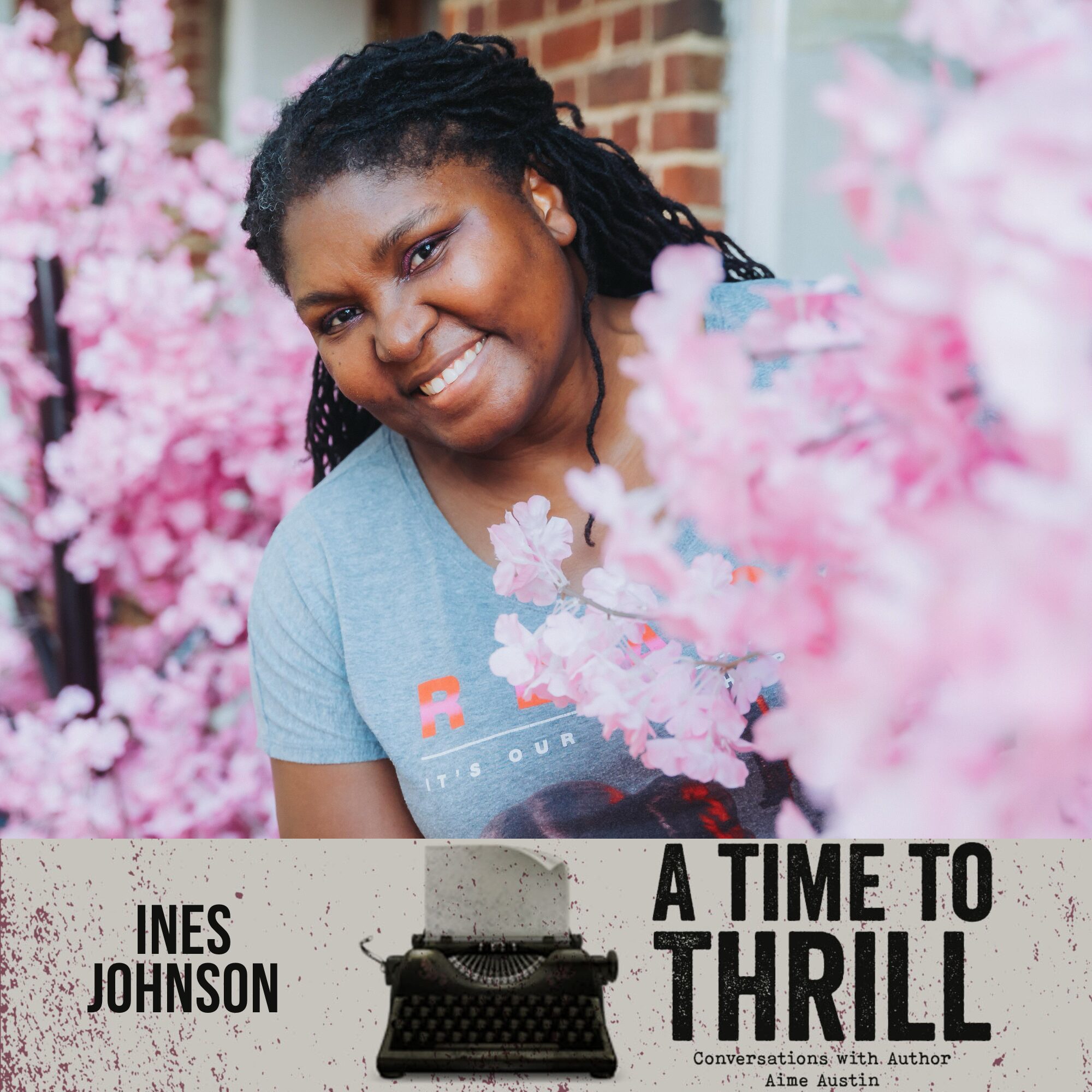
[00:00:49] Speaker A: So this month I have the delight of interviewing Ines Johnson who writes under several pen names which we'll get into during the show. Okay, sorry, I have an email notifications driving me crazy.
[00:01:03] Speaker B: So. So I met Inez, she was like.
[00:01:08] Speaker A: I don't remember her name but I remember her face.
But to be honest, I think I was probably going by Silly Fox back then. So Ines is.
She's a romance author, she's written a bagazillion books. She didn't know a number, I didn't press her on it. But what's interesting about that is that she did a talk at Romance Author mastermind in 2019 about self correcting. And this is like one of the things, I'm sure it's a recurrent theme with guests I interview, but for people who were not successful like right out of the gate and I've interviewed a couple of those people who like woke up one day, sold a million books.
[00:01:53] Speaker B: And they're like woohoo.
[00:01:55] Speaker A: But it doesn't happen to everyone or doesn't happen to most people.
[00:01:58] Speaker B: And as a friend has pointed out.
[00:01:59] Speaker A: Apparently I know a larger number of those people in proportion to those who really exist. I don't know, I think I know a lot of savvy smart women. Anyway, all that said, she gave a talk about going from four figures a month to five to six figures a year.
And at the time I don't know if she had hit that number. But what was super interesting about it is that she took the time to figure out why her books weren't selling and fixing it, fixing the marketing, fixing in her case genre hopping, but fixing what wasn't working.
And the theme of at least that romance about the Mastermind and maybe the one before it is it's not the books 95% of us. And even if you can't write well, that doesn't matter as we can attest to with some best selling novels. Which I will not mention. But authors have a lot of feelings about books that are not well written, that sell really well.
But in that case, clearly the story like hits something in a huge number of people.
So all that said, she did the thing that many of us did out of the gate, not the smart ones, but the rest of us, which was like sort of genre hopping.
[00:03:17] Speaker B: And you're like, you wake up one day. Because the thing about writers is that writers read.
[00:03:21] Speaker A: Most writers I know read everything, read anything and are not nearly as narrow in their taste as some readers are. And when you grow up reading everything.
[00:03:33] Speaker B: You think, I can write everything.
[00:03:36] Speaker A: And, and I've had this feeling myself, I am the same author. And so if I'm writing in different genres, what difference does that make in terms of like readers enjoying it? Because I will read anything. But what I will say is I do have an author I really like whose name I will not mention, who decided, let's say 10 years ago, branch out into like ya of all things.
And I read, it was like there was a trilogy. There may have been two trilogies. I think I read the first trilogy and all I could think of is, what are you doing? Like, you're really good at X, just write X. I don't think you're so good at Y. I can get a better Y, like better YA actually story out of people who are really good at that.
[00:04:27] Speaker B: And you should stay in your lane. In which I would never say to.
[00:04:29] Speaker A: Her face, but it, I get it.
But there are other authors who hop around and I'll read anything, but maybe not everybody can be in every lane. Maybe those authors hit at different times in my life and therefore I was more receptive to everything.
[00:04:47] Speaker B: And like, as I get older, I'm.
[00:04:49] Speaker A: Getting a lot less receptive. I'm going to tell you something like old being. The beauty of being an older woman is that you don't care.
But the hard thing about being an.
[00:04:57] Speaker B: Older woman is that you don't care.
[00:04:59] Speaker A: So things come across and you're like, and you just keep it moving.
[00:05:03] Speaker B: Whereas when I was younger, I had.
[00:05:05] Speaker A: A much broader range of things, I'd read a much broader tolerance, more time.
[00:05:10] Speaker B: More of everything, more youth, that's for sure.
[00:05:15] Speaker A: So it's just interesting to have a conversation with an author who is willing to see the. See the mistakes, not stay the course of just leaving everywhere, self correct, get on a lane and become successful.
So she talks a lot about that. And then also she went into the business that a lot of authors have been in which is teaching courses. I will say that. Well, no, probably greater than 50%, maybe 80% of the courses that authors teach are about marketing. And as she talks about marketing changes. And it's changing now, actually, we're having. We're hitting another sea change.
A lot of the methods that most authors I know, including me, have been using to advertise have become unavailable or ineffective. Unavailable in the sense that advertisers are defaulting to AI and we cannot opt out of it without great difficulty.
[00:06:11] Speaker B: And AI may be good at many things. I'm not sure what.
[00:06:16] Speaker A: They all are answering Google questions in a lovely fashion, you know what I mean, with full sentences.
But what they're not good at is targeting readers.
And so people I know are spending a lot of money without the ability to reach readers or not able to spend money at all because the people they're targeting, AI is throttling.
So with that sea change, marketing has changed. And the people who are doing courses on, like, ways to market that have been effective for 10 years, actually, I don't know what they're doing. All that said, you know, talks a little bit about not marketing, not selling. Excuse me, not selling courses, but marketing, but talking about writing in other things in the business that stay constant.
So all that said, I. I'm getting. So it's another video podcast. I'm so excited about these, actually. They're, like, way more fun than I thought they'd be. The clips that I've been like, sharing like on Instagram and YouTube and TikTok and everywhere have gotten a lot more traction. I know people like face and people like human faces telling a story.
And I'm discovering that I like it too. The only downside is that actually I have to catch us and make sure that I look like camera ready as camera ready as I'm going to look, I'm not going to like, do like a full face makeup or something. I just don't have the time, the makeup or the ability.
So all that said, if you haven't read His Last Mistress, feel free.
It's. I still love the story.
I don't have any kind of release date for the book that I wrote that's been sitting on the hard drive for six months now.
I have like many irons in the fire and so far nothing has caught on, so who knows? But we'll see. We'll see what happens with that.
In the meantime, I'm actually thinking of writing a series with Valerie Dodds. So Valerie is currently in my Casey Court Nicole Long universe. That's a lovely fixed place that I like to go. Is the current Cuyahoga county prosecutor. She's a young prosecutor, but she came on after scandal, which is how we sometimes get new people. There's scandal, everybody cleans house. They give you somebody new, and then the new person has literally some of.
[00:08:42] Speaker B: The same problems the old person had.
[00:08:43] Speaker A: Because the problems don't go away even when you change the people. Although, hopefully, actually today, for the city of New York, crossing fingers that a new person can solve some of the intractable problems.
Said so Valerie Dodds is the Cuyahoga county prosecutor. And I've had, like, two book ideas brewing in my head. I don't know which one I would do.
I can't write two books at one time, so I'd have to choose. But I do want to explore what it's like. She's a young black woman. She's taking over as prosecutor. And actually, when I lived in Cleveland, there was a black woman prosecutor. Her name was Stephanie Tubbs Jones. She later became representative, and then she died. Actually, I don't know what she died of, but she did die.
And it was an interesting time because Cleveland, many Rust Belt cities, or even New York or San Francisco or even the city, have these periods, and then they have a black mayor and it's a big deal, or a black leader come in, and then that goes away and we go back to what we had before.
But I'm interested to see and explore what it's like for her to have that job and maybe not have the traditional power structures around, or people, not the power structures not being as invested in her success and what that looks like in the face of the same intractable problems, people committing crimes, different people getting different justice based on race or socioeconomic status or anything.
[00:10:16] Speaker B: There's any number of things. Gender. There's a whole lot of reasons that everybody doesn't get the same justice system.
So who knows?
[00:10:25] Speaker A: Still deciding on that. Maybe by the time this comes out, I'll have a head start on that. But that's sort of the direction I'm going in. I only have two book ideas, maybe only two books on that. But I thought I was sort of done with my little Cleveland universe. Maybe I'm not done. There's a couple more themes I'd like to explore.
So be on the lookout for something from Valerie Dodds sooner or later. Maybe later this year, if I'm putting my nose to the grindstone.
So this has been a long intro.
I want you to, if you're watching me on YouTube to, like, subscribe and share. I'm learning because the more people that see it, the more people who can experience these conversations. And I really love to feature conversations with really brilliant, creative women who are making it work in a world that's working against them. So without further ado, this month I'm happy to do an interview with Inez Johnson.
[00:11:36] Speaker C: Before we dive into today's conversation, I want to take a moment to thank this episode's sponsor, Audible.
[00:11:43] Speaker B: You know how much I love a good story.
[00:11:44] Speaker C: I write them, I read them, and sometimes when I can't sit down long enough to open a book, I listen to them. Lately, I've been listening to Audible while I walk, travel, or even sometimes while cooking dinner. There's something about hearing a story perform that makes it come alive in a different way. I just finished okay, Julie Chan Is Dead by Leanne Zhang, an Alice Feeney book, Blue, Beautiful, Ugly, and the latest Linley book by Elizabeth George.
[00:12:13] Speaker B: So I'm gonna be honest. This is how I do it.
[00:12:15] Speaker C: I get a book both on Kindle and on Audible and I go back and forth listening to both. So when I'm driving in the car or with my son at some activity, I will listen to audiobooks. And then when I'm home, I read them on Kindle. And Audible makes it easy to switch back and forth in the app.
[00:12:35] Speaker B: Honestly, I do it every time.
[00:12:38] Speaker C: I just, I want to keep the book going while I'm driving. And so I just switched switch to the audiobook.
[00:12:46] Speaker A: And then when I get home, I.
[00:12:48] Speaker C: Switch back to the Kindle because honestly, I can read faster than I can listen.
Anyway, the best part is that with Audible, you get a 30 day free trial. You can start listening today. You get one audiobook you can keep forever, even if you cancel. So if you've been wanting to read more stories that pull you in and.
[00:13:02] Speaker A: Won'T let go, including my own Casey.
[00:13:04] Speaker C: Court series, which are all available on audible, go to audible.com the link is in the show notes or in the alternative ebooks buzz Audible.
[00:13:17] Speaker B: Hi and welcome to A Time to Thrill. It's me, your host, Amy Austin. This month I have the absolute delight.
[00:13:23] Speaker A: Of speaking with Ines Johnson.
[00:13:24] Speaker B: Hello.
[00:13:25] Speaker D: Hi.
[00:13:26] Speaker B: How are you?
[00:13:28] Speaker D: I'm doing great.
[00:13:30] Speaker B: So I will say this. I appreciate your writing discipline because I don't have it.
[00:13:36] Speaker A: So you emailed you.
[00:13:36] Speaker B: You're like, I write from this time to this time. I was like, that is amazing. I write whenever, wherever, with no rhyme or reason.
[00:13:46] Speaker D: No, I mean after I finish my morning Session. If I'm like, oh, I want to.
[00:13:52] Speaker E: Go this place and write again, okay. But no, it has to be.
[00:13:57] Speaker D: I have to write in the morning. And then I feel like the rest of the day I'm done.
[00:14:01] Speaker E: Like, I finished writing today. I can do. I can lay on the couch and.
[00:14:05] Speaker D: Do nothing if I want to.
[00:14:08] Speaker B: So I feel that way about exercise, but nothing else.
So if I go to the gym, like between five and eight, I'm like, look at this, my day is done.
Okay?
So we all have our priorities, and clearly mine is not right.
So what I'm saying to you off Mike, is that we met at the romance Author Mastermind in Houston in 2018 or 2019, depending. I don't know, depending on what I.
[00:14:38] Speaker D: Was talking about, I'll remember you were.
[00:14:42] Speaker B: Talking about, I swear to God, switching genres or blending genres or making being distinct in your marketing about genres.
[00:14:52] Speaker D: 2019.
[00:14:54] Speaker A: Okay.
[00:14:54] Speaker B: I mean, I remember the talk.
[00:14:58] Speaker D: I was talking about how I went from making four figures. Figures a month, making five figures a month, which is six figures, which became six figures a year.
And that talk was about how when I first started writing, I was just genre hopping all over the place because I didn't really understand that I was genre hopping because I was writing all romance novels, but I was writing dystopian romance. Then I wrote contemporary romance, and then I wrote paranormal romance, and I was all over the place. And I didn't understand that there were readers who wanted to read just paranormal romance. They really weren't interested in dystopian or who wanted to read just one chili pepper and not five chili pepper.
[00:15:39] Speaker E: I didn't understand that.
[00:15:41] Speaker D: And so when I came to understand, because I kept building new audiences, which is a great problem to have. But they didn't want all. All the people did not want all of my books, and I didn't understand that. And when I. When someone sat me down and explained the difference when genres to me, then I thought, oh, okay. And so I made a new purposeful name that was just specifically one genre was clean and wholesome Military Romance. I did that with the under, knowing that I understood this audience, knowing that I understood what they were looking for. I understood where they were, I understood how to talk to them. And I put all that together in a nice little cauldron and I sent it out into the world, and that's how I hit six figures.
[00:16:20] Speaker A: So who.
[00:16:20] Speaker B: Well, I don't need to know who set you down, but what. How receptive were you to that? Sit down. Because this is something I Talk about with authors, we have varying levels of receptivity to people who explain why our business isn't working.
And sometimes it. People have to say it to you more than once.
[00:16:39] Speaker D: Yeah.
[00:16:40] Speaker B: So what made you receptive?
[00:16:43] Speaker E: I think sometimes you're.
[00:16:44] Speaker D: You're not. It's not that you don't want to hear it. It's that you don't understand what they're saying. You just hear words and they. It's not going to click.
Like, I needed to go through writing all those because those were the stories in my head. Those were the stories that I wanted to tell. And if you had told me that to stop writing, that's all I would have heard.
[00:17:02] Speaker E: Stop writing. Not stop writing this.
[00:17:04] Speaker D: This romance and that romance under this. Under the same name. I would not have heard that. I would have just heard you say, stop writing.
[00:17:11] Speaker E: I was like, I can't. I have to write what I. It took me.
[00:17:15] Speaker D: I had to make those mistakes. Personally. I'm someone who's not afraid to make a mistake. So that does. Some people are afraid to make mistakes, and that would scare them. Making mistakes doesn't scare me. Having no plan is what scares me.
[00:17:28] Speaker E: So I had marketing plans and all this stuff, but it was a new.
[00:17:32] Speaker D: Marketing plan each time, and that was just a waste of time. It was just too much.
So I was receptive because I had been in the trenches and I didn't. I didn't see.
I knew something was wrong.
I didn't know what it was. So I was ready to hear. This is probably your what's wrong? And let me show you how I know that this is wrong. Look, these readers, they don't read the same books.
[00:17:58] Speaker E: So you're talking to different people.
[00:18:00] Speaker D: So I was ready to hear it. That's really what it is, I think.
[00:18:03] Speaker B: How many books had you written before that message came through?
[00:18:09] Speaker E: I stopped counting years ago in 2018 is when I stopped counting. I remember the number when I stopped counting. It was at 86 when I stopped counting.
[00:18:17] Speaker D: I have absolutely no idea how many books I've written today, and I don't want to count. It's. It's a lot.
[00:18:22] Speaker E: It's.
[00:18:22] Speaker D: I'm thankful that it is a lot of books, and they. They keep me comfortable.
But I had written enough books that you could see that other people could see what I was doing and saw that. I bet you if you just did this, this little tweak, things would get better for you.
[00:18:41] Speaker B: Did it feel at all?
How can I say this? Did you feel at all hemmed in Creatively, because, look, I have genre hop, so I'm not like, no, there's no innocence here.
And I do like writing some genres better than others. But I will say this. And this is like, this is Sky. Warren said this to me. I don't even know. I think we were at some other sort of like indie uncon type thing. And I was complaining about probably money, and she was like, well, which books make more money? And I was like, I actually don't know the answer to that because to me it's one big pot. You know what I mean? And you get the money and that's. And. And so I went home and I did the calculations and I found out that the thrillers for me made more money than the romance, even though contemporary romance is a better seller, is a genre, but not my contemporary romance. And I can tell you, I mean, I know why that's not the. I'm not unclear about that, but that was.
It was. I want to say it was hard to hear. It just was like, oh, so the things I like to do creatively, I can continue to do it, but I can't necessarily expect money to come from it. And if I'm okay with that trade off, then I'm okay. But if I want more money, then I need to make a different decision.
But I. But it took.
She may have said that to me in like 2017, and. You know what I mean? And that was like three years after somebody else who also does very well had said it to me and I couldn't hear it then.
I mean, I remember sitting in San Francisco and I was like, what'd you say? Okay, I'm gonna go home and do the same thing.
[00:20:17] Speaker D: I would have the same answer if you.
[00:20:20] Speaker A: I.
[00:20:21] Speaker D: Because you can keep writing those books, nobody's going to stop you. No, when you're honest with yourself about your goals, and if your goals are to make money, then you have to go one path. If your goals are to tell the books of your heart and to get them out there, that's another path. Those two paths can run side by side. They can, but it requires a lot of honesty.
It requires.
It requires a plan because they might be too far apart.
And there's. There might be. They might. You might not be able to build a bridge between them. And then you have to be honest and you might have to choose one or the other.
[00:20:59] Speaker B: No, I mean, I've had the bridge problem because I had the same pen name for both in the beginning. And then people would, I swear to readers would Write me. And they're like, I didn't really like the other book. And I was like, you didn't see the dark figure on the COVID as opposed. Goes to like the people kissing, like, you know what I mean? So I.
I had to come to it. So I will say this. So how did you start writing? Because I always think. I'm sure you've met many people in life who are like, I always wanted to write a book. But the number of people who want to write books and the number of people who do write books is not the same.
[00:21:33] Speaker D: I just knew that I always wanted to be a storyteller.
I didn't know that it was going to be books, books. I thought that I was gonna. At first I thought I was gonna make movies because I love.
I had, I. My mother too. We had a huge Betamax, then VHS DVD collection.
[00:21:55] Speaker E: And still to this day, I'm constant.
[00:21:56] Speaker D: I collect.
[00:21:57] Speaker E: I still collect scripts.
[00:21:58] Speaker D: It's. It's a hobby of mine.
But I knew I was going to be a storyteller. And it didn't matter to me how I told stories. Like I said, at first I thought it was gonna. I was gonna make movies. And then someone put a film camera in my. They didn't put a film camera in my hand. They put a lighting meter in my hand. And I thought, it's gonna take this long before I can even turn up the camera on. Because you have to.
[00:22:19] Speaker E: Because the film can't see light.
[00:22:20] Speaker D: You have to. You have to make the film see the light.
I was done.
[00:22:27] Speaker E: Give me a video camera. A video camera can see the light. This is great.
[00:22:31] Speaker D: So I went and I studied television making, so I studied TV screenwriting, I studied episodic screenwriting. So I went into television and I could make stories. That was. That was another clue. I could tell stories fast. I could tell them episodically. I can tell them one after the other, almost like you're chain smoking them. And I liked that.
But I'd always been an avid reader, and because it was just another way to consume stories. Songs are ways to consume stories. Talking to people, meeting new people, those are ways to consume stories. So I was always obsessed with storytelling and I was reading and doing. Reading smut and writing and producing children's television. And in between takes.
[00:23:16] Speaker E: Watching you have your children's. Who's making your children's media?
And I was like, I could do this. I could totally write a. I could totally write a romance novel.
[00:23:25] Speaker D: And it did. I wrote a romance novel and I put it up there and someone bought it and I was, I was just done. I wanted to do it again and again. As someone explained early on in this career, someone explained, it's like a, it's like a drug.
Like hitting that publish button and seeing someone buy your book, it's a drug. And they were absolutely right. I am an addicted addict.
So I started publishing books and produce and I was still producing, I was producing, I was teaching screenwriting.
And then there just came a time where I realized I was like, it's going to be inconvenient for me to go to set. I need to write this book. It's going to be inconvenient for me to teach this class.
I make more money if I finish this book. That happened.
So I went whole hog into the writing of the books.
[00:24:17] Speaker A: Did it feel like a hard leap.
[00:24:19] Speaker B: Because you have children? I mean, I'm not saying that your children are on the verge of starvation. I'm just saying for, I mean, I know obviously we know a lot of people who've made that leap, but it's. For some people I know that is hard. Especially, I mean, I know people who like, I'm working, I went from full time and then I'm 80 and then I'm like one day a week. But they're like hanging on to the other thing because they're afraid that anytime the books, the book income can go away.
[00:24:45] Speaker E: Yeah.
[00:24:46] Speaker D: So I.
[00:24:47] Speaker E: One, I don't, I would not consider myself frugal.
[00:24:49] Speaker B: I just don't.
[00:24:51] Speaker E: Other than books and pens and journals.
[00:24:53] Speaker D: There'S not a lot that I want.
And my children were grown now, but when, when I made this decision, they were pretty close to, either they were working or they were close to working. So that they, they were, they both worked at the movie theater their whole middle school and high school careers. So they had their own pocket money. So if they wanted something expensive, they could buy it themselves. So I'm saying all that to say that my expenses were not, not great. I remember I was, as a professor, I was bringing home like maybe $4,000 a month after taxes. This was like in 2012, I don't remember.
I went, I went full time in 2018.
So when the book started to make that much money a month, I was like, huh, I could.
[00:25:44] Speaker E: And granted being a, being a, I.
[00:25:46] Speaker D: Was a college professor, I taught at an art college and that a full time load for me was 20 hours a week. So it really wasn't a hardship for me to teach and to write the books. But the art college went out of, out of business in 2018, 2019. One of those years. But I didn't panic because the books were. The books were making more money than my professorship.
[00:26:08] Speaker A: So.
[00:26:09] Speaker D: And I, again, I didn't. I owned my car.
I, I was renting. I, I left. I'd gotten divorced. So I left the house and I moved into first a two bedroom and then a three bedroom. And I was fine. Like, I was living well within my means.
So I didn't need to make like six figures a year. That's not. I think some people have it in their minds they can't go full time before they're six figures a year.
[00:26:37] Speaker B: But I know people have magic numbers. I remember having being at a conference and everybody had somebody pretty savvy asked everybody what your number is, and people had all sorts of numbers. I had never thought people like, I have to make a million or I have to make. And I was like, oh, people have numbers.
[00:26:53] Speaker E: Well, no, it's not, it's not.
[00:26:54] Speaker B: I didn't. The numbers didn't always correlate to reality. They had like a magical number. So if I don't make 999,000 that I can't quit. And yes, do you need nine? I'm not saying people. Some people need that, but do you need.
[00:27:06] Speaker D: It's. You're exactly right. I knew what I needed to take care of my family.
So when I was making that, I knew I was going to be okay. And I did see the writing on the wall that the college was. They were getting less and less students and that the college was probably going to shutter its doors. But I didn't panic because I knew I had this other thing that was making me money. Now I did erroneously think, well, now I have more time. That never works.
But I did do the two pen names. And so it did give me some more time to work on the business and also gave me more urgency to work on the business.
[00:27:43] Speaker B: No, that urgency helps. I mean, I will say that urgency helps because without the. So people who don't quit their job. And I'm not. No, shame on people don't quit. I'm not saying everybody needs to quit their job, but people. The urgency is not always there. Or people are like, okay, well if this doesn't work, I'm going to rely on this. And there's not as much of a push to make. Make this work. And I'm not saying it. There's no magic panacea. It doesn't work for everyone. Some people's books are more palatable. To general, broader audiences than others. But urgency.
Urgency helps. Urgency can help.
So what kind of things did you read when you were a kid?
[00:28:22] Speaker D: I read the chapter books. I read the babysitters club books. I read.
And then I got my hands on my godmother's harlequin romance novels. Little teeny, tiny ones.
[00:28:35] Speaker E: I.
[00:28:35] Speaker D: There always needed to be some type of kissing in. In order for me to. In order for it to hold my attention. I didn't like just straight fantasy. There was just a lot of world building. I would get bored.
I liked watching the transformation of characters, but I really liked it even more when it was a. There was a relationship there. So I was. I was hardwired for romance from the beginning, I think.
[00:29:00] Speaker B: Well, okay, when I was younger, I feel like books included more Romance genres weren't so heavily, like, siloed.
So even like detective stories and all of those stories, there's. There was a couple, not necessarily at the forefront, but somewhere in there. And I don't see that as much now, but I read. Well, I can also direct my reading a little bit more now because there's more. More options, more variety and, you know.
[00:29:28] Speaker D: In ebooks, that's true. We can direct our. Our options more and we can be there. We can get very specific. Like, I do know some authors that really write to reader expectations and the readers will tell them, I didn't like that you did this. Don't do it the next time, and they'll listen.
I, I couldn't live that life. I couldn't. I. I'm not a short order author.
[00:29:49] Speaker E: Like, I'm not a short order cook.
[00:29:50] Speaker D: I'm not a short order author. But I think, I think romance is so particular because we have very clearly defined rules and we have an audience that like and expect that those very clearly defined rules. Like, I'm not gonna just sit down and read a thriller or a.
A mystery or a literary fiction that someone says, oh, there's a romance in it, because I don't trust it. Like, if there's a. If there's romantic subplots and romantic elements.
No, that's not good enough because you're not giving me that guarantee. I was talking to someone earlier about dark romance, and why would someone. Why. Why is dark romance so popular in the world that we live in when there's just so much strife going on and so much divisiveness in our world today? And there's so many, so much darkness? Like, wouldn't people want to escape it? And I said, well, they are. That's the whole point. Because when you say when you put romance in something, there's a guarantee. There's a guarantee of a happily ever after. So you can take that reader through the darkest moments, through the draggiest dredges of society, and they will follow you because they know that they have a guarantee at the end that you're going to make it work.
I think horror is the same. You can do the worst things that you can think of, but I know at the end justice is going to prevail, good's going to conquer evil. If you can make me that guarantee, I will go with you. But when you come, when you walk out your door into reality or when you turn on the news and you see reality, we do not have a guarantee right now in this moment, we don't know how this is all going to turn out.
[00:31:26] Speaker E: So yeah, I'm going to run to a book instead where I get a guarantee.
[00:31:32] Speaker B: No, I do, you're right. Because one of the things that people dislike is ambiguity in life. I mean, and so books, genre fiction for the most part offers a guarantee of whatever the experience is that people are looking for in genre fiction, whether that's justice or happily ever after or whatever that is. But people know there's a certain satisfaction that is coming with the ending. How we get there is.
Well, that's why that's your art.
[00:32:01] Speaker D: That's the, that's the creator's art.
But we, and I hear people so.
[00:32:05] Speaker E: Many times, people who are not in Romancelandia say it's the same formula over and over again.
[00:32:11] Speaker D: Yeah, that's why I have an audience. Because they know I know I can deliver that formula. And if you say that then they're gonna know they don't understand the formula. I'm not going to go hang out with them.
No.
[00:32:22] Speaker A: That's interesting because I think it's the same for television.
[00:32:25] Speaker B: And people, they're like. But it's, they. I was thinking about this because I've been watching. I'm not gonna get into this is watching people's takes on reality tv. Because I was. I have been on Mars and I did not realize reality TV had taken over television until like six months ago.
And people are complaining about how it's structured, but they want the result that the structure brings.
[00:32:47] Speaker D: They want the result. Yeah.
[00:32:49] Speaker B: And then people act outside the structure or they. Producers make choices. People are just up in arms and I think, think I wish people would accept form. I wish formulaic weren't a slur.
Because I think if people thought about what they want, they're going to realize that then it has to be built within a certain framework and that's, it's interesting. Or maybe it just has to be marketed differently.
[00:33:14] Speaker D: I don't know.
[00:33:17] Speaker E: I, I, I don't know.
[00:33:19] Speaker D: I, I hear you with the reality television. I think I, the complaints that I'm hearing is that producers are making it unsafe.
[00:33:27] Speaker B: Well, there is that. I mean, that's a. Yeah, yeah.
[00:33:29] Speaker D: In order to get the result, they're making it unsafe. And there are certain, I think reader expect, the reader expectations, just like viewer expectations are the same.
They want, they want the same result.
But it's your job to take them on the journey. And I don't know, I think, I know I do. Again, the, the complaint that I keep hearing is you're making it unsafe. Like you're, you're inviting people in there who have horrible records, who don't hear consent, who may have done something awful in their past, and you're, you want me to root for them? No, I don't even want them on my screen. That's, that's really what I'm hearing a whole lot.
So I can't, I can't really speak to that. They are.
[00:34:15] Speaker B: Because I think what I'm hearing is the people, the promise of the premise is not there. So the, and this is, I think, and I only watched a few reality shows that are the, that are romance ones. Like, I've not watched like Survivor or competition shows. And like, well, you have to like go do something physical. So I don't know about that, but I think that in the ones where there's going to be love at the end, what I think what people are finding is that, so if they're casting people and they're casting influence people who want to be influencers and whether that's successful is a different conversation, then they feel like those people are not buying into the idea that, and so, and I'm, I'm like, okay. And that's a casting decision. And I, I can understand, like, I mean, I live in la. I understand some of the decisions. We want people who look good and like, you know, are a certain age. And I mean, they have a whole list of things that are going to make it more palatable in the, in theory, but then, but people feel like there's, the promise of the premise is not made in the sense that, well, if he's just here for to be influencers, he's just here because some, he thought it would be like a lark, then I know that he's not here for love. And I'm watching it knowing that he's not here for love.
[00:35:23] Speaker D: Yeah, that makes complete sense. You have the premise that they're here for love, but then you cast someone who's just here for the follows and you can see it.
[00:35:33] Speaker B: I'm not saying that those hero, they.
[00:35:35] Speaker D: Don'T believe the hero or they don't believe the heroine. We talk in romance about unlikable heroines, so you're probably casting an unlikable heroine and you don't care whether or not if she falls in love at the end, you're out. Or you're talking about a. Or an alpha whole hero.
Yeah, that's probably what it is. Unlikable, heroin and alpha whole hero.
[00:35:52] Speaker B: No, it's the same. And so, like, you're, you're clarifying it. I think I'm coming into it with a lens of, well, I understand what you want and I understand you're not getting what you want. And I want. I'm just thinking about the disconnect, because if reality TV is like now, apparently like 80% or something of television, then I know, I just looked this up because. Well, anyway, a friend of mine was like talking about coming back to LA to do TV writing, and I was like, I don't think there's a lot of rooms left to, you know, to write episodic tv.
And it's just interesting to me that we know people want a certain story structure and I don't know if they're willing to accept that reality. He was going to have to manipulate the certain things. And I understand that. The safety stuff I have a lot of thoughts about because I'm like, do people not have Google? But whatever.
I'm like, if your fans can look it up on Google and they don't even have database access, then I don't know what's going on with that.
But I think it's interesting that there's a clash between the idea of realism and then storytelling.
Because nobody's life, well, not nobody's life, but many people's lives are not, cannot, cannot be tied up in a Nepo at the end.
[00:37:11] Speaker D: Yeah.
[00:37:13] Speaker B: So can I ask you about genres? So what.
[00:37:15] Speaker A: Okay.
[00:37:15] Speaker B: What genres are you writing and publishing now?
[00:37:19] Speaker D: So in S. Johnson writes paranormal romance, fantasy romance, romantasy and spicy stuff. So sometimes I do write contemporary. Spicy, not so much, but I will write it every once in a while. Shanae Johnson writes sweet and wholesome military romance. And then I just launched a third pen name Beginning of Last Month or middle of last month? Jem Johnson writes Later in the Life Spicy romance.
[00:37:46] Speaker B: Oh, I have so many questions about later in Life. Okay, readers say they want later in Life romance.
Do you think readers will consistently buy it? Because everyone I know and people have not launched a separate name, so. But everybody I know who's made and okay, I could already see the answer in my head who've made the decision to publish one of those in their seal series or one of those in their small town romance series, and one of those in whatever ongoing world they have, have not found success with that. And we talked about the COVID Is it that they. Yeah, the gray hair guy on the COVID Like, what is the disconnect? And I actually don't know.
I like the idea of it and I think I would read it, although I haven't sought it out myself as I say this out loud. But what are readers asking for it or what made you decide to go in that direction?
[00:38:38] Speaker D: I went in that direction because I just couldn't write another 20 year old heroine. I was just, I, I don't, I don't identify with you. I'm not interested in what's going on.
[00:38:47] Speaker E: In your life while I'm dealing with hot flashes and itchy boobs.
I just, I just, I felt like I was lying. So instead, so I wrote, I wrote.
[00:38:57] Speaker D: Characters who were experiencing things that I'm experiencing and it flowed out of me, easily flowed out of me.
[00:39:06] Speaker E: And I know this again.
[00:39:08] Speaker D: I know this audience that I'm talking to, they might not be the audience that, you know, is making a, a big brouhaha on like Tick Tock, but I know where they are. I know how to, I know, know what they're going through. And I just wanted to say, I see you. Even if, even if this. So this pen name is only almost three weeks old. Almost.
And I, so I'm, I'm, I'm, I'm gathering the data to answer these questions for myself and I, I just, this is just the stories that I want to tell. Even with my, and that's Johnson pen name. I've been writing fairy tale romances and I, I noticed that my heroines are all older.
They're not the, the ingenue princesses. They're all, they're older and they're, they have older sensibilities. They're dealing with themes, themes that, that don't come with coming of age.
So no matter what, like, this is where my mind is. Like, I'm not writing for new adults. I'm just not so I wanted, I thought maybe I need to talk.
[00:40:17] Speaker E: And when you look at, when I.
[00:40:18] Speaker D: Look at my audience analytics, it's not new adults that are reading my stuff.
[00:40:22] Speaker B: No, no, no, no. That's. I mean, at least. Well, your audience may not be mine, but most of my audiences are older women. They're like 30 to 60.
[00:40:32] Speaker A: So.
[00:40:33] Speaker B: But I don't.
Well, I just actually asked them something. I just took a little survey in my last newsletter. But I don't know if people identify and you can't ask people this. You have to see what their behavior is because people will say one thing and behave a different way.
I haven't figured out if people, what people are, what they're getting from reading younger characters. I personally like writing 30s, although I just wrote a book when she was 43. So clearly even my characters are aging, but I don't know what people are looking, what people want in that experience. Are they like reliving their twenties? Are they thinking about a do over? Or is that an age where they feel like the possibility abilities are endless and therefore can identify with the heroin in that way where like in your 40s they're not endless. Like things are more fixed. I mean the older you get, the more fixed things become.
So I do wonder if.
I wonder. I know what people are reading for, but I don't know what people are reading for in that heroin experience because there's a lot of like theories that people read heroines for the idea that they can like substitute themselves in.
And so maybe you're substituting yourself in an earlier age. And I don't know if that's what people are looking for or they're looking for like communion in the sense of, oh, she's going through what I'm going through now. Let's talk about that.
[00:41:53] Speaker D: I, I've heard that I'm not interested in writing a blank slate character where you can insert self. That doesn't interest interest me. I am interested in writing. I love writing flawed characters.
I am interested in experiences and growth and transformation.
[00:42:16] Speaker B: So.
[00:42:17] Speaker D: And when I, when I write, I'm usually trying to solve a problem, maybe a problem in my life, maybe a problem that I've seen in someone else, one of my girlfriend's lives.
So I'm writing for that. So I would probably be more of a communal writer than an insert self identity writer. And we'll see if that works or not.
[00:42:39] Speaker B: Yeah, no, I'm fascinated to find out because that's, it's a. I mean, this is not the first time I've had this conversation. But I think it's because the contemporary, my contemporaries are all getting older. Like I was thinking about in the shower this morning. Like all the writers I know and talk to regularly are like my age or older or like slightly, you know what I mean? Like in this age range. And so.
But we were all 30 once too, you know what I mean? You know, but I'm. We're not 30 anymore. And the number of 30 year olds I talk to on a regular basis is pretty slim because they're not in my orbit and I don't talk to young writers as much mainly because post Covid and post RWA imploding, there haven't been.
I don't have that same like writer and community that I did before that had people at all stages of their career.
[00:43:23] Speaker A: So my.
[00:43:25] Speaker B: I'm honestly like a little siloed in terms of the people that I associate with and I recognize that and I don't know if I have time to change it. Like I have a 6 kid who's almost 16. I got things to do, like other things that I have to like manage in my life that are different than that.
What, so what kind of covers do you think you'll have? Because I'm sure you've seen the, I don't know, people call them like the silver daddy covers, you know, and, or silver fox covers and that's how you know. Or that's what people are using that I know to signal that, that the heroine or the couple are going to be older.
[00:43:57] Speaker D: I'm not doing that.
Which we'll see if that's a mistake.
[00:44:00] Speaker B: No, I mean, I don't know. I'm not saying I don't know either.
[00:44:03] Speaker E: We'll see. We'll totally see.
[00:44:05] Speaker D: I. Because I wanted to lean more women's fiction, romance, there are women on my covers. Because I want to telegraph that these are going to be stories in all of my stories. Spoiler alert.
The, the. The sisterhoods, they come to the rescue. Not the guy, he may want to come to the rescue, but it's only the sisterhood that can fix it.
So.
Because that's, that's just really interesting to me at this time in my life. Like it's kind of like a boys on the side kind of thing. Like of course she wants, of course she wants romance, but her sisterhood, those are the, those that's even more important. That's a tick more important than.
[00:44:45] Speaker B: No, that's actually my current life experience, to be frank. But I don't know if it's my age or the hot flashes.
[00:44:51] Speaker E: I was.
[00:44:52] Speaker B: Whatever. Sorry. My hormone replacement patch didn't stick this morning. It's actually the first time it didn't. It fell off and I was like, I don't have time for this. But I don't know what I did that would. I don't know. New batch, new prescription. They're not. The stickiness is not great, but neither here nor there.
So do you think that. Let me say this.
Oh, is the readership.
Is your. Are you keeping the same readership in their agent? Because this is a conversation I have with authors, or are you constantly looking to bring in new people? Of. Well, we're always looking to bring in new people. But are you looking to bring in new people who can meet you where they. Where you are writing, or are you looking to bring in new people? Well, I mean, this is a backlist issue everywhere.
[00:45:41] Speaker D: I can say this because I can see it very clearly with my Shanae Johnson pen names, with, With. With my Sinead Johnson, the clean, wholesome military romance. Those people want an experience. They don't care about the age of the character. It's very clear.
They want that experience, that feel good experience of wounded man playing girl and she's the one who heals him with love. They want that, and they will read it over and over and over again.
If I had more ideas for that series, I would write it. I'm just out of ideas for that.
[00:46:10] Speaker E: Series right now.
[00:46:14] Speaker D: With my Ines Johnson pen name, the Romantasy and the fantasy romance, I'm finding younger readers. And I think because that's where Book Talk and Book is right now with Jem. I'm very specifically looking for a very specific reader.
[00:46:31] Speaker B: Where are you looking for them? I mean, so the thing I was thinking about this morning also is Facebook. Okay. We're gonna get into Facebook advertising and the push for AI and how they're making it difficult to advertise to the same audiences that we have been for years. That's like a logistical problem that I'm looking. I was just reading about how people are trying to solve it, and it seems all over the place. But then how are you going to look for those readers given some of the restrictions? Because, okay, I have a lot of friends who do scroll through TikTok. I am not one of them. I don't have the patience for it. But so there are people in that age range who are on TikTok or are on Instagram and God knows they actually are on Facebook too. But how do you think you can reach them, given the diffuse nature of marketing today.
[00:47:22] Speaker D: So I, I think SEO is going to be the, the, the answer for us.
So when I am making a Facebook ad nowadays, the same as if I'm making a TikTok post or an Instagram post, it's all about SEO. It's not so much about hashtags anymore.
[00:47:41] Speaker B: I know just with limitations.
[00:47:44] Speaker D: The AI is crawling for that, those keywords.
So I will make a Facebook ad and I will put it to romance readers or contemporary romance or whatever they want me to, and then I will stuff that, the description with as many keywords as I can think of to get to the right readers. With the creative, I make the creative, I make it relatable. So let's take gem, for example. So maybe I make like an 80s reference that you're only going to get if you were a kid watching Saturday morning cartoons, and then you're going to.
[00:48:17] Speaker E: Say, oh, that's for me.
[00:48:19] Speaker D: So it's that kind of connection with the creative and with the SEO in the description.
That's, that's, that's just what I've been doing.
[00:48:28] Speaker B: That's actually, that's, that's, that's a, that's a very creative way to go about it. It's just. And I'm sure, well, I'm sure you're online because we're all online too much, but I'm sure you're seeing that people are having those issues with what they were doing wasn't working. And then what is the next thing to do do?
Because the Facebook ads actually have been working fairly well for a long time.
I think we're like creeping up on eight, nine years where they have been pretty stable in the way that they work. And now there's a sudden sea change and there's a lot of.
[00:49:02] Speaker D: Yeah, what, what these sweet summer children are gonna have to realize or they're gonna fail is that sea changes happen.
That, that, that sea change took long, but it's going to change again in our lifetime. Probably change a couple of times in our lifetime. And the only thing that I not, and I keep that at the forefront of my mind, use this while it works, learn from it, and then be evolving.
Just you. If you expect everything to work the same for the rest of your life.
[00:49:36] Speaker A: Oh.
So.
[00:49:39] Speaker B: But, you know, and I think about this often because I do understand.
[00:49:44] Speaker A: It'S.
[00:49:45] Speaker B: Not so much sunk cost, but sort of inertia. But I do know, and I was thinking about this today, the authors I know are getting older and it's not that they don't want to adapt. But people sort of have, like, they're like, they're over it. They're over the rapid change because they're aging and not necessarily in the rapid change era of their lives as well. So, I mean, I do have some appreciation for. If I'm in my 60s and I'm like at the tail end of this, do I want to spend my time trying to figure out how AI is going to change things? Not necessarily. Do I want to maintain my income for the next five, six years? Yes. And there's some tension there. I mean, I see it every day.
[00:50:18] Speaker D: Yeah, that's what we were talking about earlier when we were talking about when you have your books and do you want to, do you want to make money or do you want to have someone read? And like those, those rows may vary. You have to figure out how to build that bridge.
I wish we could have it always, but sometimes we just can't. And you're going to have to make a decision about what you're going to do. And that decision may be a departure from what you did. That's. That is, that is not just the nature of business.
[00:50:44] Speaker E: That is the nature of, that is the life experience.
[00:50:47] Speaker D: Things are constantly moving, shifting, changing.
And if you sit still, you might get eaten by a lion.
[00:50:56] Speaker B: Well, no, it's like sitting in the ocean and it'll just keep swirling right around you. It's going to keep, keep moving. And you're like, why am I, why is the sand like rolling under here? All right, so the last thing I wanted to ask you about is what made you to decide to teach courses? Because that's, I mean, okay, from what I'm hearing now, you were teaching that before, so that may have not been as hard of a transition as it was, but it's from the people I know who decide to teach courses. Honestly, it's a full time job and you know what I mean, that's, it's, it's its own. It's not the same as writing and it's not the same as reading. It's not the same. So what made you decide to go that route? Given as far as I can see from the back end, the sheer level.
[00:51:38] Speaker D: Of work involved, two things. One, teaching proves to me that I have a level of mastery over something. I'll come back to that in just a second.
And when I, when I figure something out. So it's kind of. This is the same side of the same, the different sides of the same core. And so it shows Me, I have a level of mastery. And then when I achieve that mastery, I want to go tell somebody.
So I only teach what I actually do.
You're not gonna find me.
I do something for one day.
[00:52:09] Speaker E: There's this funny song. There's this couple that does these memes. And I remember, I can't remember their name, but the two of them, they played pickleball one time, and they had so much fun. They made a song about it.
[00:52:22] Speaker B: It.
[00:52:22] Speaker E: And then at the end of the song, the box was like, yeah, we played one time. They made this really funny, catchy song about pickleball.
That's not me. I. I will work at something.
[00:52:32] Speaker D: Work at something.
[00:52:33] Speaker E: And then I'm like, guys, I want to tell everybody I figured it out. This is how. This is what I did. This is what made it work. And I did this and I did. Well, when I did that, it went wrong. But then I. I course corrected, and I went this way. And this is my data, and this is how I'm gonna improve. And then I'm gonna do this and this at this. Okay, you heard me. Bye.
That's me.
So when I'm teaching something, I'm usually teaching it because I'm like, I figured it out, and I want everybody else to know it.
[00:52:59] Speaker D: I started charging because people kept asking me questions over and over.
[00:53:04] Speaker E: So it's not a hardship for me because, one, I don't like to.
[00:53:06] Speaker D: I don't prefer to teach marketing because marketing changes so much. And I feel like when you try to capture marketing, it's like capturing lightning.
And it's going to change. It's going to disappear. It's going to change its shape. It's going to move over there, then flash over here. It's going to change.
So I might give a presentation on marketing, but you. You're rarely going to see me teaching a course on marketing because it's going to change tomorrow. I like to teach about craft.
I love to teach about a process.
I love to teach about something like overarching, like, so it's things like that. And so that's not a hardship to me because I'm not going in and constantly changing.
[00:53:48] Speaker E: And I've already done the work in.
[00:53:49] Speaker D: The sense that I figured it out and I've written my little notes, and I probably made a cute little bullet.
[00:53:54] Speaker E: Journal spread about it.
[00:53:55] Speaker D: And I really just want to show you my bullet journal spread. That's really why I make the class.
[00:53:59] Speaker E: Here's the PowerPoint and here's the picture. It's my bullet journal. Spread.
[00:54:04] Speaker D: So. So again, whenever you see me teaching something, it's because I figured it, I've been using it, I've been doing it, I've been failing at it. I've succeeded and I figured it out and now I'm going to explain it to you and then I'll go back to work to do the next thing.
[00:54:20] Speaker B: That's fair. So, okay, this is my last question. What are you reading now?
[00:54:25] Speaker E: I got sucked into the Kate Daniel series. I know I am late.
[00:54:31] Speaker D: I've tried to read this series I don't know how many times because I absolutely adore the Burn for Me series.
[00:54:39] Speaker E: The Nevada Baylor series.
[00:54:41] Speaker D: I love that so much.
[00:54:43] Speaker E: And so I would keep trying to.
[00:54:44] Speaker D: Read Kate Daniels and I would just get bored in the first chapter and then the dramatized version came out and I was like, let me try it again.
And I tried it again and I got sucked in. It's 10 books plus a whole bunch of like, little novellas. So I'm busy.
[00:55:03] Speaker B: That'll give you a good little good thing to do over the holidays when things slow down. At least for me slow down a little bit.
Well, I'm sorry. That's funny. I, I do want to thank you so much for taking the time today to chat with me and fit me into your, your writing. What? You got a box? You got, you got schedules? I, I, I, I, I appreciate the idea of it. I just, I'm not that person. I'm just like, look, it's, it's Tuesday, so I do want to appreciate you taking the time to chat and talk all about books and, and moving into a new phase. So, Ines Johnson, thank you so much.
[00:55:43] Speaker D: Thank you.
[00:55:45] Speaker C: The time to throw with me, your host, Amy Austin. If you enjoyed today's episode, I hope you'll share, rate and leave a five star review on Spotify, Apple Podcasts or wherever you listen. You'll help others find and enjoy my conversations with brilliant women creators. Also, please hit the subscribe button on your podcast app. In addition to hosting this podcast, I'm an author. My latest book, His Last Mistress is out now. Check out the five star reviews. Get your copy before someone else spoils the twist. I'm also the author of the Nicole.
[00:56:13] Speaker A: Long series of three girl thrillers.
[00:56:15] Speaker C: The first four books in the series are now live. You can download Outcry, Witness, Major Crimes Without Consent and the Murders Began to your e reader right now. I'm also the author of the Casey.
[00:56:25] Speaker A: Court series of legal thrillers.
[00:56:26] Speaker C: These titles are available wherever books are sold. Your local library and also an audiobook. You can follow me on Substack, Instagram, Blue sky, Facebook, and TikTok, all at legal thriller author One Long Word. Thanks for listening and I'll be back with you soon with more great conversations.